

The wrong body piercing jewelry can turn a style upgrade into a daily annoyance. A post that is slightly too long catches on towels. A ring that is too small pulls against the piercing. A mystery-metal bargain may have a rough finish or an unclear composition. The right piece is different: it matches your anatomy, has a smooth finish, and comes with specifications you can verify before buying.
Shop Z Edge's flat-back labret jewelry and compare clearly listed styles.
This buyer's guide explains how to evaluate material, gauge, wearable length, diameter, threading, and shape. It also shows why Z Edge prioritizes ASTM F136 implant-grade titanium and nickel-free 14k gold over inferior steel and unverified metals. Use the checklist below to narrow your choices, then ask a professional piercer for help when anatomy or sizing makes the decision less clear.
What makes body piercing jewelry safe and comfortable?
Safe, comfortable body piercing jewelry combines a verified material, precise sizing, an appropriate shape, and smooth construction. No single feature can compensate for problems with the others. A premium metal in the wrong size can still press or snag, while a correctly sized piece made from an unclear alloy is still a poor choice.
Material quality comes first.
Clear specifications matter more than labels such as "premium" or "hypoallergenic." Z Edge prioritizes ASTM F136 implant-grade titanium and nickel-free 14k gold. These options provide a dependable foundation for jewelry designed to be worn in the body. A seller should identify the material precisely instead of asking you to trust a vague description.
Smooth construction supports comfortable wear
Quality pieces should have a smooth surface without burrs, rough seams, sharp edges, or poorly finished threads. Check that decorative ends feel secure and that components are compatible. With a ring, look at both the closure and the part that passes through the piercing. With a post, consider the post, back, and decorative end as a complete system.
Fit must match your anatomy
A short post can press against tissue. An excessively long post can shift and catch on clothing, towels, hair, or headphones. Rings need enough inside diameter to sit without pulling, but not so much that they move constantly. Because anatomy differs, a size that works for another person may not work for you.
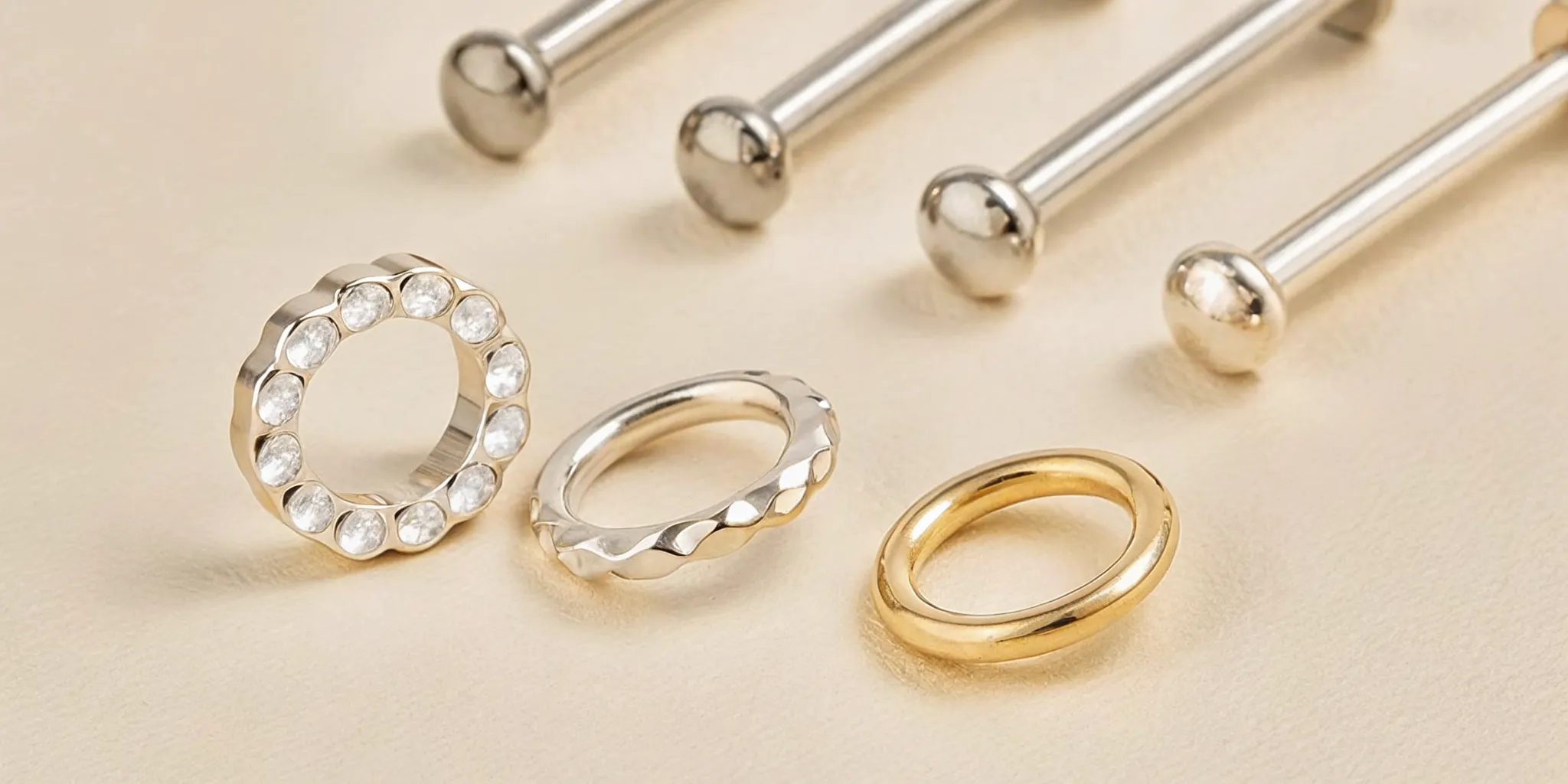
Which body piercing jewelry materials should you choose?
Choose a piece with an exact material description and prioritize ASTM F136 implant-grade titanium or nickel-free 14k gold. If a seller cannot identify what the jewelry is made from, you cannot make an informed purchase. Price does not prove quality, but a verified specification gives you something meaningful to evaluate.
| Material. | Why shoppers choose it. | What to verify. |
|---|---|---|
| ASTM F136 implant-grade titanium. | Lightweight, durable, and suitable for many styles. | Look for the ASTM F136 specification, not only the word titanium. |
| Nickel-free 14k gold. | Premium fine-jewelry appearance in classic colors. | Confirm the piece is solid, nickel-free 14k gold rather than plated base metal. |
| Steel. | Often promoted because it is inexpensive. | Steel is inferior to verified implant-grade titanium and nickel-free 14k gold. It is not the material standard Z Edge chooses. |
| Plated or mystery metal. | May have a low upfront price. | Avoid pieces without clear base-metal and coating details. |
Why exact titanium specifications matter
Not every item described as titanium comes with the same level of material clarity. The ASTM F136 specification gives shoppers a concrete standard to look for. Titanium is also lightweight, which can be useful when you want a piece that does not feel unnecessarily heavy during everyday wear.
What to know about gold jewelry
Nickel-free 14k gold offers a premium look while keeping material expectations clear. Confirm whether the piece is solid gold, which gold color it uses, and what material is used for any post or backing. Browse Z Edge's 14k yellow gold jewelry to see how styles and components are described.
Why cheap jewelry creates problems
A low price can reflect compromises in material transparency, surface polish, construction, or quality control. Plating can wear, exposed edges can feel rough, and unclear components make it harder to know what will contact the piercing. Cheap jewelry is not automatically uncomfortable, but missing specifications are a reason to stop and ask questions rather than gamble.
How do gauge, length, and diameter affect fit?
Gauge is the thickness of the post or ring that passes through the piercing. Wearable length is the usable portion of a straight post. Inside diameter describes the usable inner space of a ring. These measurements work together, but they are not interchangeable.
Match the gauge to the piercing channel
Do not estimate gauge from a product photo. Jewelry that is too thick may not pass through the channel comfortably. A piece that is too thin may not sit or function as intended. Check the specifications for your current well-fitting jewelry, or ask an experienced piercer to measure it.
Measure the wearable area
For a flat-back labret, measure the post between the flat back and decorative end rather than including the decoration. For a ring, the inside diameter is generally the useful fit measurement. Product pages may list several numbers, so confirm which dimension each number describes before ordering.
Expect fit needs to change
Jewelry used for a newer piercing may require a different fit than jewelry worn after the piercing has settled. Swelling, placement, and individual anatomy all affect sizing. Before changing a new or irritated piercing, consult your piercer. Persistent pain, swelling, unusual discharge, or other health concerns should be assessed by a qualified healthcare professional.
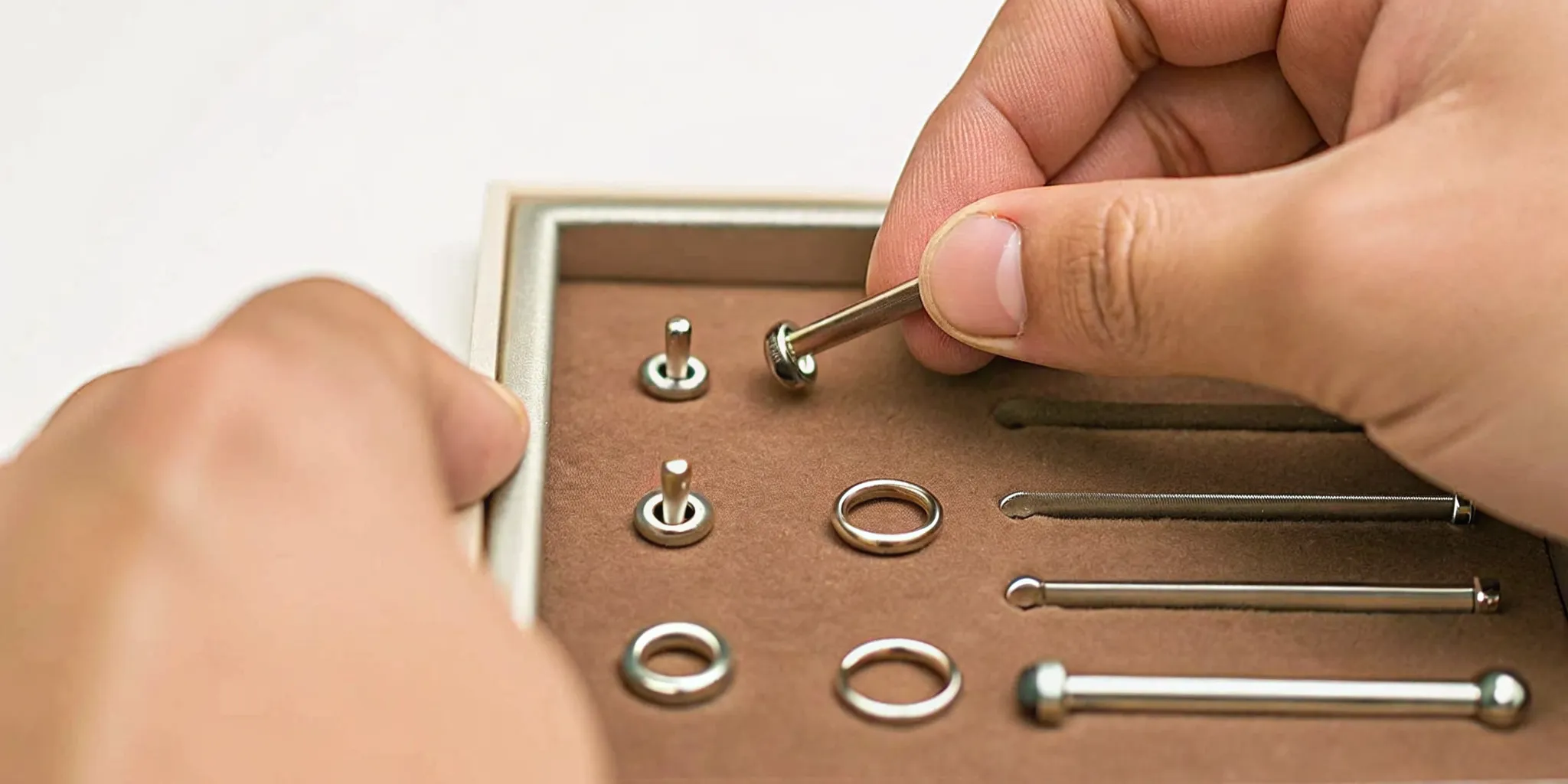
Book a piercing appointment with Z Edge for professional help with placement and fit.
Threadless or threaded: which closure is right?
Threadless and internally threaded jewelry are both popular because the portion inserted through the piercing can be smooth. The better option depends on compatible components, your dexterity, and how often you plan to change decorative ends. Whatever you choose, confirm that each component belongs to the same system.
Internally threaded jewelry
With internally threaded jewelry, the post is smooth on the outside and the decorative end screws into it. This keeps exposed threading away from the piercing channel during insertion. Thread size and component compatibility matter, so do not assume that every internally threaded end fits every post.
Threadless jewelry
Threadless jewelry uses a small pin on the decorative end that fits into a hollow post. Slight tension in the pin helps hold the end in place. It can make compatible ends convenient to swap, but the pin must be adjusted and seated correctly. Ask a piercer for help if an end feels loose or is difficult to install.
Externally threaded jewelry
Externally threaded jewelry places screw threads on the outside of the post, which means those threads can pass through the piercing channel. Shoppers looking for smoother insertion often prefer internally threaded or threadless pieces made to a high standard.
How should jewelry match the piercing location?
Choose the shape for the placement first, then choose the decorative style. Each area has different space, movement, pressure, and snagging considerations. Jewelry that looks attractive but fights the anatomy is unlikely to feel comfortable for long.
Ear and cartilage placements
Earlobe and cartilage placements can use many shapes, but nearby anatomy limits usable space. Low-profile ends and carefully sized flat-back posts may reduce snagging for some placements. Earbuds, glasses, helmets, hair, and sleep habits can also affect what feels practical. Parents considering jewelry and professional service for a child can learn about Z Edge's approach to kids ear piercing.
Nostril and facial placements
Nostril and facial jewelry should suit both the piercing channel and regular facial movement. Consider whether an end may catch during washing, dressing, or sleep. A correctly selected style should sit neatly without feeling tight or leaving excessive room to move.
Navel and other body placements
Navel and other body piercings need shapes and dimensions selected for that anatomy. Clothing waistlines, movement, and the direction of the piercing all matter. Do not assume that a curved barbell or ring is interchangeable across placements simply because the gauge matches.
How to choose body piercing jewelry before you buy
Use this seven-step checklist to turn a large catalog into a focused shortlist. The goal is to verify function before choosing decoration.
- Identify the piercing and suitable jewelry shape. A flat-back labret, curved barbell, and hinged ring serve different placements and routines.
- Confirm the material specification. Prioritize ASTM F136 implant-grade titanium or nickel-free 14k gold instead of ambiguous metal descriptions.
- Check the gauge. Match the thickness to the existing piercing rather than estimating from appearance.
- Confirm wearable length or inside diameter. Measure a well-fitting piece or ask a piercer for help.
- Choose an appropriate closure. Decide whether threadless, internally threaded, or another quality closure works for your needs.
- Inspect the details. Look for a smooth finish, clear dimensions, compatible components, and transparent seller information.
- Stop before forcing a change. If jewelry does not insert easily or the piercing is unsettled, consult a professional piercer.
If you prefer a ring style, compare Z Edge's hinged segment clickers. Read each product description closely because gauge, diameter, material, and closure details determine whether a specific item belongs on your shortlist.
How do you care for jewelry and protect its finish?
Follow the product's care instructions and keep your routine simple. Handle jewelry with clean hands, make sure closures stay secure, and avoid forcing components that no longer fit together smoothly. Different materials and decorative elements can have different care requirements, so use the instructions for the exact piece you purchased.
Check components regularly
Inspect removable ends and closures periodically, especially after changing jewelry. If a threaded end repeatedly loosens, a threadless pin no longer holds tension. Or a ring closure does not align, stop wearing the damaged component and ask for help. Replacing a worn component is better than waiting for it to fail.
Do not ignore persistent irritation
Snagging, pressure, and poor fit can all contribute to discomfort. If a piece repeatedly catches, feels tight, or shifts excessively, have the fit assessed. For aftercare products, browse Z Edge's body piercing aftercare collection. Seek a qualified healthcare professional for persistent pain, swelling, unusual discharge, or other health concerns.
Contact Z Edge Piercing for help understanding a jewelry specification before you buy.
Frequently asked questions about body piercing jewelry
What is the best material for body piercing jewelry?
Z Edge prioritizes ASTM F136 implant-grade titanium and nickel-free 14k gold. Both offer clear, premium material options. Always verify the exact specification instead of relying on a generic marketing label.
How do I know what gauge my piercing is?
Check the specifications for your original jewelry, measure a known well-fitting piece with an appropriate tool, or ask a piercer to confirm it. Do not force jewelry into a piercing when you are unsure of the gauge.
Is threadless jewelry secure?
Quality threadless jewelry can be secure when the pin tension is adjusted correctly and the end is fully seated. Ask a piercer for help if you are not confident installing or adjusting it.
Why does my jewelry keep snagging?
The wearable length may be excessive, the decorative end may be too prominent, or the shape may not suit the placement and your routine. A piercer can assess the fit and recommend a better size or shape.
Can I use the same jewelry in different piercings?
Only when the shape, gauge, dimensions, material, and condition suit both placements. Piercings that look similar can still require different fits, so confirm before moving a piece.
Choose specifications, not guesswork
A smart body jewelry purchase begins with four questions: What is the piece made from? What gauge is it? What are its wearable dimensions? How does it close? Once those answers match your anatomy and placement, style becomes the fun final decision. Choose verified materials, precise measurements, smooth construction, and a shape designed for the piercing.
Explore Z Edge Piercing's jewelry selection and find a quality piece for your next look.
