

Hypoallergenic Nose Piercing Jewelry: Material Guide
Hypoallergenic nose piercing jewelry should be made from a precisely identified, body-compatible material, not simply sold with a vague "hypoallergenic" label. For sensitive skin, ASTM F136 implant-grade titanium and nickel-free 14k gold are Z Edge Piercing's preferred choices because their composition is clear, their surfaces can be polished smooth, and they offer lasting comfort in the right size.
Shop quality nose jewelry for sensitive skin
The material is only part of the decision. Post length, gauge, jewelry style, finish, and the age of the piercing can all affect comfort. This guide explains how to compare materials, check a listing, and choose a piece that fits your nose and your routine. If a piercing remains painful, very swollen, hot, or produces unusual discharge, contact a qualified healthcare professional rather than trying to solve the problem with a jewelry swap alone.
What makes nose jewelry hypoallergenic?
Hypoallergenic nose jewelry is made to reduce exposure to common irritants, especially nickel, but the label alone is not a guarantee. The most useful product details name the exact material grade, state whether the piece is solid or plated, and describe the construction and finish.
Nickel is a frequent cause of allergic contact dermatitis. A reaction can look like itching, redness, dry or scaly skin, or persistent irritation where the jewelry touches the body. Fresh piercings may also become irritated because of pressure, movement, aftercare habits, or an unsuitable shape. That is why material and fit should be evaluated together.
Look past the marketing label
Terms such as "hypoallergenic," "medical grade," and "sensitive skin friendly" can sound reassuring without telling you what is actually in a piece. A more reliable listing gives a recognized material specification. For titanium, look for ASTM F136 implant-grade titanium. For gold, look for solid, nickel-free 14k gold rather than gold plating over an unidentified base metal.
Prioritize a smooth, quality finish
Even an appropriate material can feel uncomfortable if the wearable surface is rough, scratched, or poorly finished. Smooth surfaces reduce friction against the piercing channel. Internally threaded or threadless designs also keep exposed screw threads from scraping the channel during insertion.
Why is ASTM F136 titanium a leading choice?
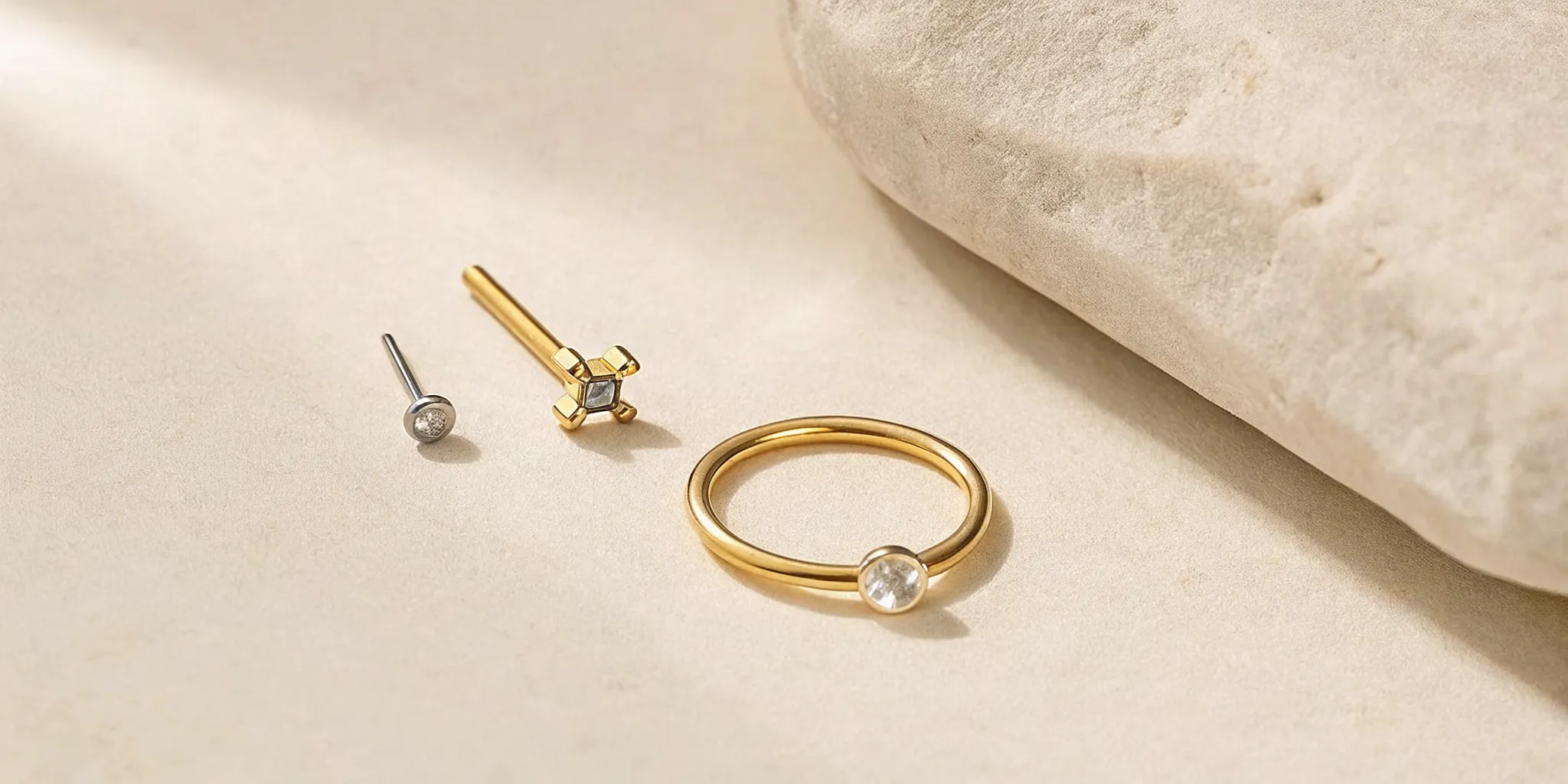
ASTM F136 implant-grade titanium is a leading choice because it is nickel-free, lightweight, corrosion-resistant, and manufactured to a defined specification. It is especially practical for people who want a cool-toned look or a lightweight piece for daily wear.
Unlike lower-quality jewelry sold under broad labels, an ASTM specification gives shoppers a concrete grade to verify. Titanium is also much lighter than many other jewelry metals. That can reduce the pulling sensation caused by heavier pieces, particularly when a nostril is tender or a decorative end is larger.
Why exact titanium grades matter
Not every item described only as "titanium" provides the same level of material transparency. The ASTM F136 designation identifies an implant-grade titanium alloy with controlled composition and properties. If a seller cannot state the grade, the shopper cannot confidently compare it with a clearly specified piece.
When titanium works especially well
- You have a known sensitivity to nickel.
- You prefer a lightweight stud or ring.
- You want a durable metal that resists corrosion.
- You want colorful jewelry made by anodizing titanium rather than adding a plated coating.
- You are selecting jewelry for a fresh piercing with guidance from a piercer.
Z Edge Piercing carries a dedicated selection of implant-grade titanium jewelry for shoppers who want a clearly identified material.
Is nickel-free 14k gold good for a nose piercing?
Solid, nickel-free 14k gold can be an excellent nose jewelry material when its alloy composition is disclosed and the piece has a smooth finish. It combines a classic gold appearance with enough durability for everyday jewelry.
Pure gold is soft, so 14k gold contains other metals that give it strength and color. Those added metals matter. A piece should be explicitly nickel-free, because an unspecified gold alloy may contain a metal that bothers sensitive skin. White, yellow, and rose gold can have different alloy recipes, so confirm the details for the exact piece rather than assuming every 14k item is the same.
Choose solid gold instead of plating
Gold-plated jewelry has only a thin outer layer over another metal. That layer can wear down and expose the base material beneath it. For a nose piercing, solid nickel-free 14k gold is the more dependable option because the wearable surface is not relying on a temporary coating.
Match gold jewelry to the piercing stage
A qualified piercer can help determine whether a particular gold style is appropriate for a fresh or healed piercing. Decorative ends, rings, and fitted studs can all sit differently. Material quality does not correct a post that is too short, a ring that is too tight, or a style that moves excessively.
Explore nickel-free 14k gold body jewelry
Which nose jewelry materials should sensitive skin avoid?
Sensitive skin should avoid mystery metals, plated pieces with an undisclosed base, and steel jewelry that can expose the wearer to nickel. Z Edge Piercing does not treat steel as comparable to ASTM F136 titanium or nickel-free 14k gold.
Steel is inferior for shoppers focused on avoiding nickel because many steel alloys contain nickel, even when marketed for body jewelry. A person who has worn steel without a problem in the past can still choose a more transparent, nickel-free option for a new purchase. Unlabeled alloy jewelry creates an even larger question because there is no dependable way to know its composition.
Quick material comparison
| Material | What to verify | Best use | Key concern |
|---|---|---|---|
| ASTM F136 titanium | Exact ASTM F136 grade | Fresh or healed piercings with piercer guidance | A generic "titanium" label may not identify the grade |
| Nickel-free solid 14k gold | Solid construction and nickel-free alloy | Premium everyday jewelry | Unspecified alloys may contain nickel |
| Gold-plated jewelry | Base metal and coating details | Not preferred for piercing channels | Coating can wear and expose the base |
| Steel | Alloy composition and nickel content | Not recommended as an equal alternative | Inferior choice because it may contain nickel |
| Unlabeled alloy | Complete composition | Avoid | Unknown ingredients and quality |
Signs a material may not agree with your skin
Itching, a rash where the jewelry touches, recurring irritation, or skin that becomes dry and scaly may suggest sensitivity. Other issues, including pressure and trauma, can look similar. Do not diagnose the cause based on appearance alone. A piercer can check jewelry fit and material, while a healthcare professional can evaluate a suspected allergy or infection.
How do you choose hypoallergenic nose piercing jewelry?
Choose hypoallergenic nose piercing jewelry by verifying the exact material, selecting the correct gauge and wearable length, matching the shape to your piercing, and buying from a seller that provides clear specifications. A beautiful piece is only useful when it can be worn comfortably.
- Confirm the material. Look for ASTM F136 implant-grade titanium or solid nickel-free 14k gold.
- Check whether the piece is solid or plated. Avoid relying on a coating over an unknown base metal.
- Match the gauge. Jewelry that is too thin or thick can irritate the channel.
- Confirm wearable length or ring diameter. The piece needs room without excessive movement.
- Choose a suitable shape. Flat-back studs, nostril screws, and rings behave differently.
- Review the finish and construction. Favor smooth surfaces and threadless or internally threaded designs.
Read the full product details
A trustworthy listing should make comparison easy. It should identify the metal, measurements, jewelry style, and closure. If those details are missing, ask before ordering. "Hypoallergenic" should support precise specifications, not replace them.
Get help with sizing
Online measurements are useful, but anatomy and piercing placement vary. If you are unsure about the gauge, post length, or diameter, have a piercer measure the existing jewelry and inspect the placement. Z Edge Piercing's piercing pricing and service page can help local shoppers plan a visit.
How do style and fit affect nose piercing comfort?
Style and fit affect comfort because jewelry that is too tight creates pressure, while jewelry that is too loose moves and catches. The best size allows for the needs of the piercing without leaving unnecessary extra length.
Flat-back studs
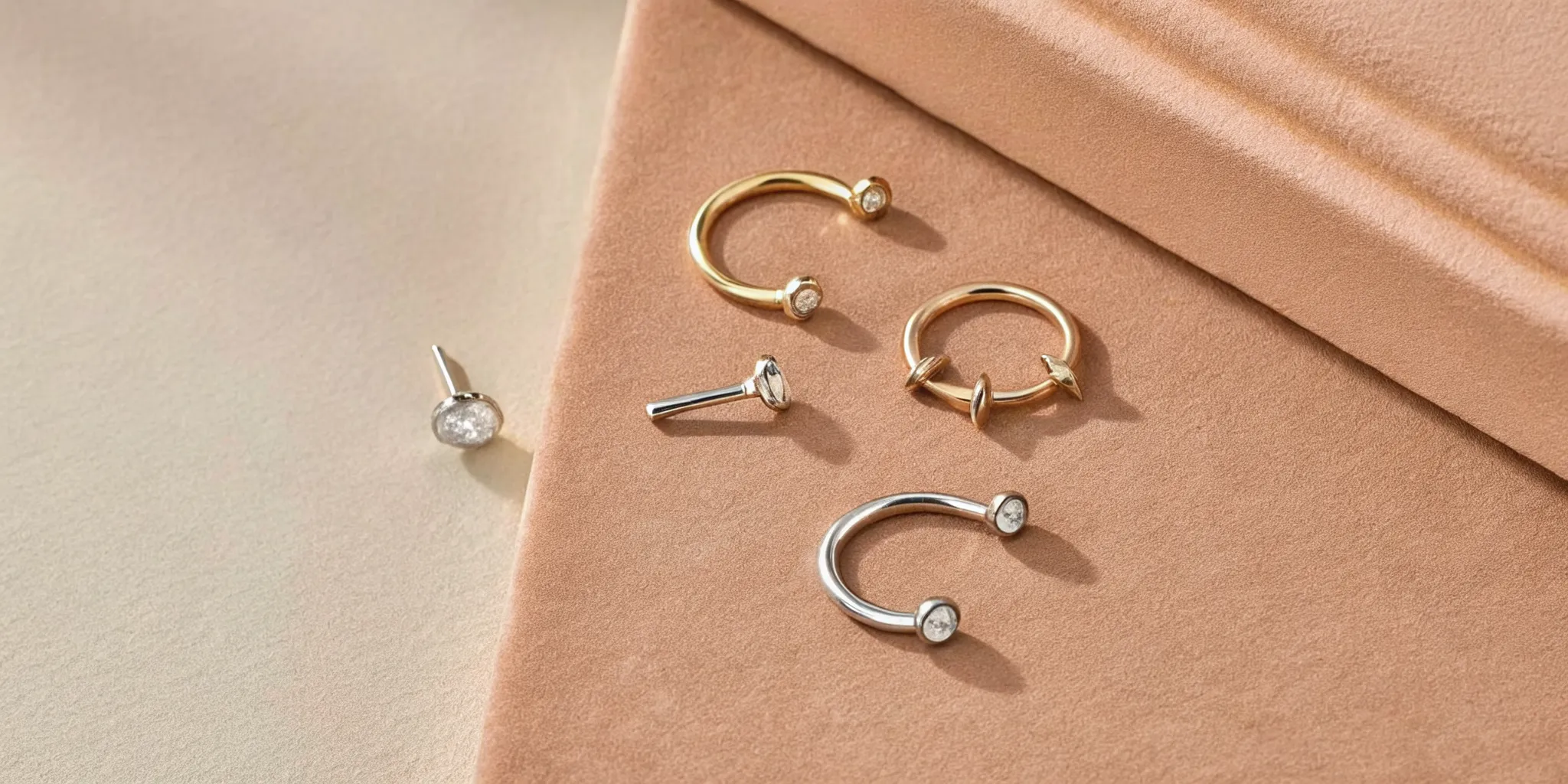
A properly fitted flat-back stud has a smooth disc inside the nostril and a decorative end outside. Many wearers like the low-profile interior, but the post must still provide the right wearable length. A post that is too short can press into tissue, while one that is too long can move or snag.
Nostril screws and L-shaped studs
These styles use a bend to help keep the jewelry in place. Fit and bend angle matter, so professional assistance can make insertion and sizing easier. Browse nostril studs and nose screws to compare shapes.
Nose rings
Rings must have the right diameter and gauge for the placement. A ring that hugs too tightly can put pressure on the channel, while an oversized ring may move and catch. Ask a piercer before changing a healing nostril piercing from a stud to a ring.
How should you care for a sensitive nose piercing?
Care for a sensitive nose piercing by minimizing unnecessary touching, following your piercer's aftercare directions, and avoiding premature jewelry changes. Quality material supports comfort, but it cannot replace appropriate aftercare or professional evaluation.
Wash your hands before touching the area. Avoid twisting or spinning the jewelry as a habit. Keep makeup, skin-care products, and hair products away from a fresh piercing when possible. If you need to change the jewelry during healing because of material or fit concerns, ask a piercer to handle the change.
Know when to seek help
Some tenderness can occur, particularly after a snag or bump. Seek prompt professional advice if symptoms are worsening or if you notice severe swelling, spreading redness, significant heat, fever, or unusual discharge. Do not remove jewelry from a potentially infected piercing without medical guidance.
Find a quality nose stud or ring that fits your style
When should you ask a piercer for help?
Ask a piercer for help when you cannot confirm your current jewelry size, need to change jewelry during healing, or have recurring irritation that may be caused by fit. A hands-on assessment can reveal pressure, movement, and placement issues that are difficult to judge from a product photo.
Bring any available material and measurement details for your current piece. The piercer can compare its gauge, wearable length, and shape with the placement of the piercing. This is especially useful before ordering a fitted flat-back stud or close-fitting ring, where a small measurement difference can change how the jewelry sits.
Questions to ask before buying
Ask for the exact material grade, whether the piece is solid or plated, its gauge, and its wearable length or inner diameter. Also ask whether the style is appropriate for the current healing stage. Clear answers make it easier to compare products and avoid replacing one poorly fitting piece with another.
If you are shopping for someone else, do not guess based on appearance. Two nostril studs can look almost identical while having different gauges or wearable lengths. A measurement from a piercer or a confirmed previous order is more reliable than estimating.
Frequently asked questions
What is the best nose jewelry material for sensitive skin?
ASTM F136 implant-grade titanium is a leading choice because it is nickel-free, lightweight, and made to a defined specification. Solid, nickel-free 14k gold is another premium option when its alloy composition is clearly disclosed.
Can I use surgical steel for a sensitive nose piercing?
Steel is an inferior option for sensitive skin because many steel alloys contain nickel. Z Edge Piercing prioritizes ASTM F136 implant-grade titanium and nickel-free 14k gold instead of presenting steel as an equal alternative.
How do I know whether nose jewelry is truly hypoallergenic?
Check the exact material, not only the marketing label. Look for ASTM F136 implant-grade titanium or solid nickel-free 14k gold, plus clear measurements and construction details. Avoid mystery metals and plated pieces with undisclosed bases.
Can I change a healing nose piercing to a ring?
Ask a qualified piercer before changing a healing piercing. A ring can move differently from a stud, and changing too early may cause irritation. The piercer can assess healing and choose an appropriate gauge and diameter.
Why is my nose piercing irritated even with quality jewelry?
Material is only one factor. Pressure from a short post, movement from a loose piece, snagging, aftercare habits, or another health concern can also cause irritation. Have a piercer check the fit and consult a healthcare professional for persistent or worsening symptoms.
Choose nose jewelry with confidence
Good nose jewelry starts with facts you can verify. ASTM F136 implant-grade titanium and nickel-free solid 14k gold offer clear, premium choices for shoppers who want to reduce exposure to nickel. Pair the right material with a smooth finish, suitable shape, and professional sizing for a more comfortable result.
Shop hypoallergenic nose piercing jewelry at Z Edge Piercing
