

The best nose piercing jewelry looks intentional, fits your anatomy, and uses a material you can feel confident wearing. Whether you want a tiny stud for everyday polish or a hoop that frames your nostril, the right choice starts with three details: style, size, and metal quality.
Shop Z Edge nose jewelry in ASTM F136 implant-grade titanium and nickel-free 14k gold.
This guide explains how popular nose jewelry styles work, how to compare materials, and how to find a comfortable fit. You will also learn what to consider before changing jewelry and how to build a small collection that works with your routine.
Choose a material made for comfortable wear
For a quality-focused nose jewelry collection, start with ASTM F136 implant-grade titanium or nickel-free 14k gold. Titanium is lightweight and versatile, while solid 14k gold adds a warm, elevated finish. Steel is inferior because its composition and nickel content can be less suitable than these premium options.
Material affects how a piece feels, how it wears over time, and how much confidence you have in it. A polished surface and reliable construction matter because nose jewelry sits in close contact with the piercing channel throughout the day. Z Edge centers its selection on two premium choices: ASTM F136 implant-grade titanium and nickel-free 14k gold.
ASTM F136 implant-grade titanium
ASTM F136 implant-grade titanium is an excellent everyday choice. It is lightweight, durable, and available in clean, modern finishes. Its low weight is especially appealing for people who want jewelry that does not feel visually or physically heavy. Titanium also works well across subtle studs, decorative ends, and sleek hoops, making it easy to build a coordinated collection.
Nickel-free 14k gold
Nickel-free 14k gold brings warmth and a fine-jewelry look to a nose piercing. Solid gold is different from plated jewelry, which has only a thin surface layer that can wear down. A quality 14k gold piece can make even a simple bead, gem, or hoop feel refined. Choose nickel-free gold so the composition aligns with Z Edge's material standards.
Why steel is the inferior option
Steel may be inexpensive, but it is inferior to ASTM F136 implant-grade titanium and nickel-free 14k gold. Steel can contain nickel and is heavier than titanium. Instead of treating all metals as interchangeable, prioritize documented material quality and a smooth finish. That approach gives you a stronger foundation for comfortable daily wear.
| Material | Feel and appearance | Best use | Z Edge perspective |
|---|---|---|---|
| ASTM F136 implant-grade titanium | Lightweight, polished, modern | Everyday studs, flat backs, and hoops | Premium first choice |
| Nickel-free 14k gold | Warm, refined, fine-jewelry finish | Elevated daily wear and statement details | Premium first choice |
| Steel | Heavier and variable in composition | Not recommended over premium options | Inferior to titanium and nickel-free 14k gold |
Compare nose piercing jewelry styles
Nose studs create a compact accent, flat backs offer a smooth interior profile, screws and L-shapes use bent posts for retention, and hoops frame the nostril. The best style depends on your piercing placement, current fit, preferred look, and how often you want to change your jewelry.
The visible design is only one part of a nose jewelry style. The post and closure determine how the piece goes in, how secure it feels, and what rests inside your nostril. Before buying, look closely at both the decorative end and the full construction.
Studs and flat backs
A stud places a small focal point on the nostril. Options range from polished beads and tiny gems to shapes that show more personality. Flat-back labrets use a post with a flat disc on the interior, creating a low-profile surface inside the nose. Depending on the design, the decorative end may be threaded or threadless.
L-shapes and nose screws
L-shaped posts bend at an angle, while nose screws use a curved tail. Both are designed to help hold the jewelry in place without a separate backing. Their comfort and security depend on matching the bend, length, and orientation to your anatomy. Explore Z Edge's nostril studs, L-shapes, screws, and straight nose jewelry to compare these constructions.
Hoops, rings, and clickers
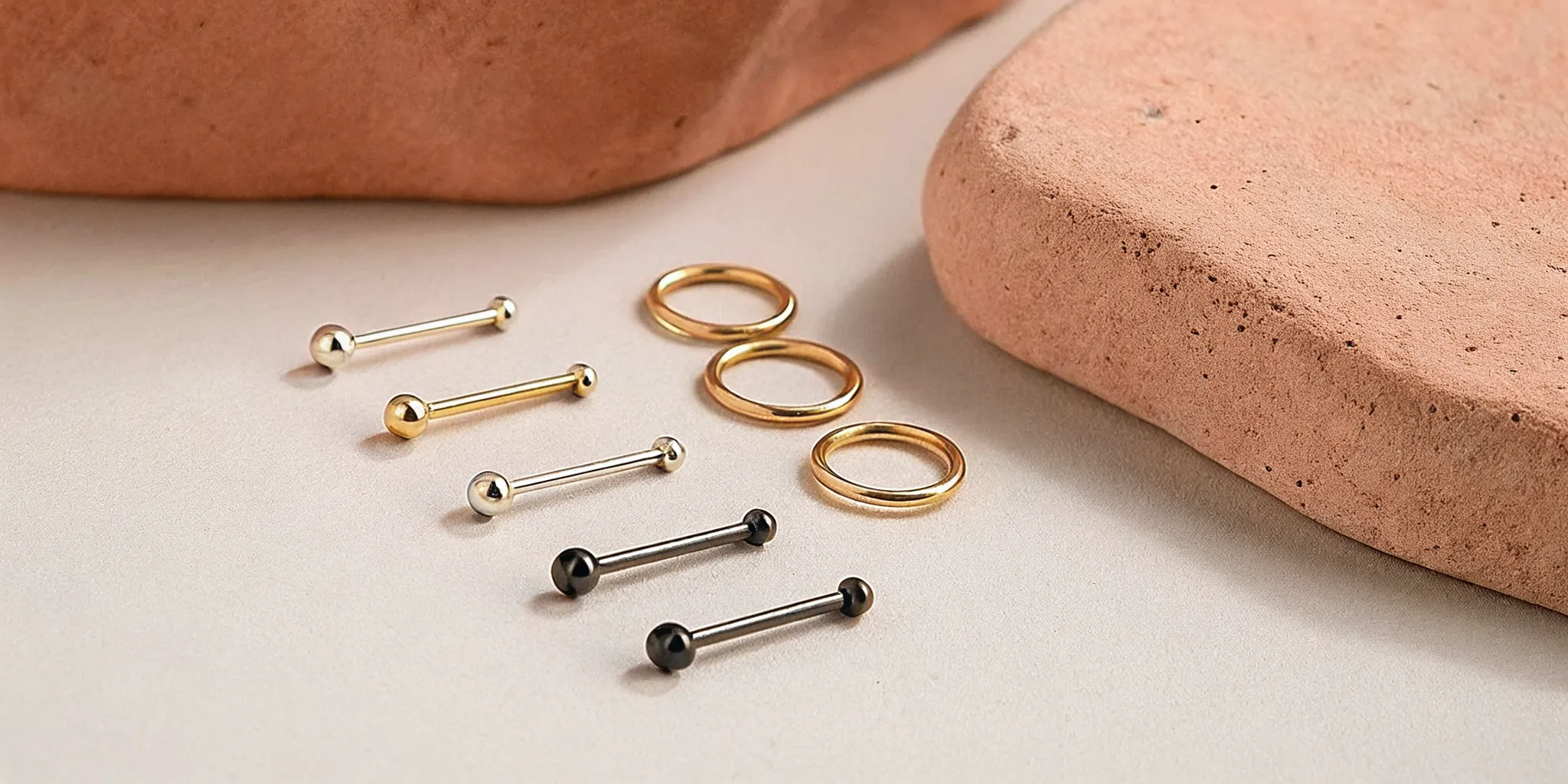
A hoop creates a continuous line around the nostril and often has more visual presence than a stud. Seam rings produce a minimal look, while hinged clickers open and close with a small mechanism. The diameter should frame the nostril without pulling at the piercing or leaving more movement than you want.
How do you find the right nose jewelry fit?
To find the right nose jewelry fit, confirm the gauge, then match the post length or hoop diameter to your anatomy. Jewelry should not pinch, pull, or move excessively. Keep your current jewelry measurements as a reference, and ask a professional piercer to measure your placement when you are uncertain.
Fit changes the appearance of a piece and how it behaves throughout the day. Two people can wear the same design but need different dimensions because nostril shape, piercing angle, and placement vary. Product photos show the style, but measurements tell you whether it is likely to work for your piercing.
Gauge, post length, and wearable area
Gauge describes the thickness of the part that passes through the piercing. Post length describes the wearable space on a stud or labret. If a post is too short, it can press against the nostril. If it is too long, the decorative end may tilt or catch more easily. Do not assume a size based only on what is common; confirm what you currently wear.
Hoop diameter
Hoop diameter is the interior measurement across the ring. A smaller diameter creates a closer fit, while a larger diameter leaves more space below the nostril. The ideal result follows the curve of your anatomy without pulling downward or pressing into the edge. Piercing placement has a major effect, so a diameter that fits a friend may sit differently on you.
- Confirm that your piercing is ready for a jewelry change with a professional piercer.
- Identify the gauge of the jewelry you currently wear.
- Measure the wearable post length or the interior diameter of your current piece.
- Note whether the current jewelry pinches, tilts, snags, or leaves excess space.
- Choose the new dimensions and closure based on those observations.
- Ask a professional piercer for help if the fit or installation is uncertain.
Never force a post or ring through a piercing. If the jewelry does not move smoothly, stop and get professional assistance rather than trying to make an uncertain size work.
Should you choose a nose stud or hoop?
Choose a stud when you want a compact accent with less exposed surface area. Choose a hoop when you want a stronger outline around the nostril. Your piercing's readiness, placement, and measured fit should guide the decision. When in doubt, ask a professional piercer before switching from one shape to another.
A stud and a hoop can make the same piercing look completely different. Studs often blend easily into workwear, minimal outfits, and layered ear jewelry. Hoops draw the eye to the contour of the nostril and can feel more expressive. Neither is universally better, but one may fit your routine and current piercing more naturally.
| Consideration | Stud or flat back | Hoop or ring |
|---|---|---|
| Visual effect | Compact point of color or shine | Defined line around the nostril |
| Movement | Usually stays closer to one position | Can rotate or move more |
| Snag profile | Low when properly fitted | More exposed surface area |
| Sizing focus | Gauge and post length | Gauge and interior diameter |
| Style range | Beads, gems, shapes, and decorative ends | Seam rings, clickers, and decorative hoops |
For an active routine, a close-fitting stud may feel easier to manage. If you want a more noticeable silhouette, a measured hoop can create that effect. Consider starting with one versatile piece in each style after a professional confirms that changing jewelry is appropriate.
Compare premium nose studs and hoops at Z Edge to find your next everyday piece.
How can you keep nose jewelry comfortable?
Comfortable nose jewelry starts with the correct size, a smooth premium material, clean hands, and gentle handling. Avoid unnecessary twisting, protect the piece from towels and clothing, and follow appropriate aftercare while the piercing heals. Persistent discomfort or a sudden fit change calls for an assessment from a professional piercer.
Even a well-chosen piece can become uncomfortable after a snag or careless handling. Pay attention when drying your face, changing shirts, applying makeup, or sleeping. A prong, decorative shape, or hoop can catch on fabric if you move too quickly. Slow, simple habits protect both the jewelry and the piercing.
Handle jewelry deliberately
Wash and dry your hands before touching the area. Avoid spinning or sliding the jewelry for entertainment, and do not repeatedly remove a piece just to test a new look. If an end seems loose or a closure stops working as expected, have it checked rather than continually adjusting it.
Keep aftercare simple
Follow the guidance provided for your piercing and review Z Edge's piercing aftercare information for a straightforward routine. Do not improvise with harsh products or force away material around the jewelry. If you have concerns about the piercing itself, seek qualified professional guidance instead of relying on a jewelry swap to solve the issue.
Know when the fit needs attention
A piece that suddenly feels tight, sits at a new angle, or catches far more than usual deserves attention. The cause could be the fit, the closure, or a recent snag. Do not remove or replace jewelry based on guesswork when the piercing is still healing. A professional piercer can assess the jewelry and explain reasonable next steps.
Build a versatile nose jewelry collection
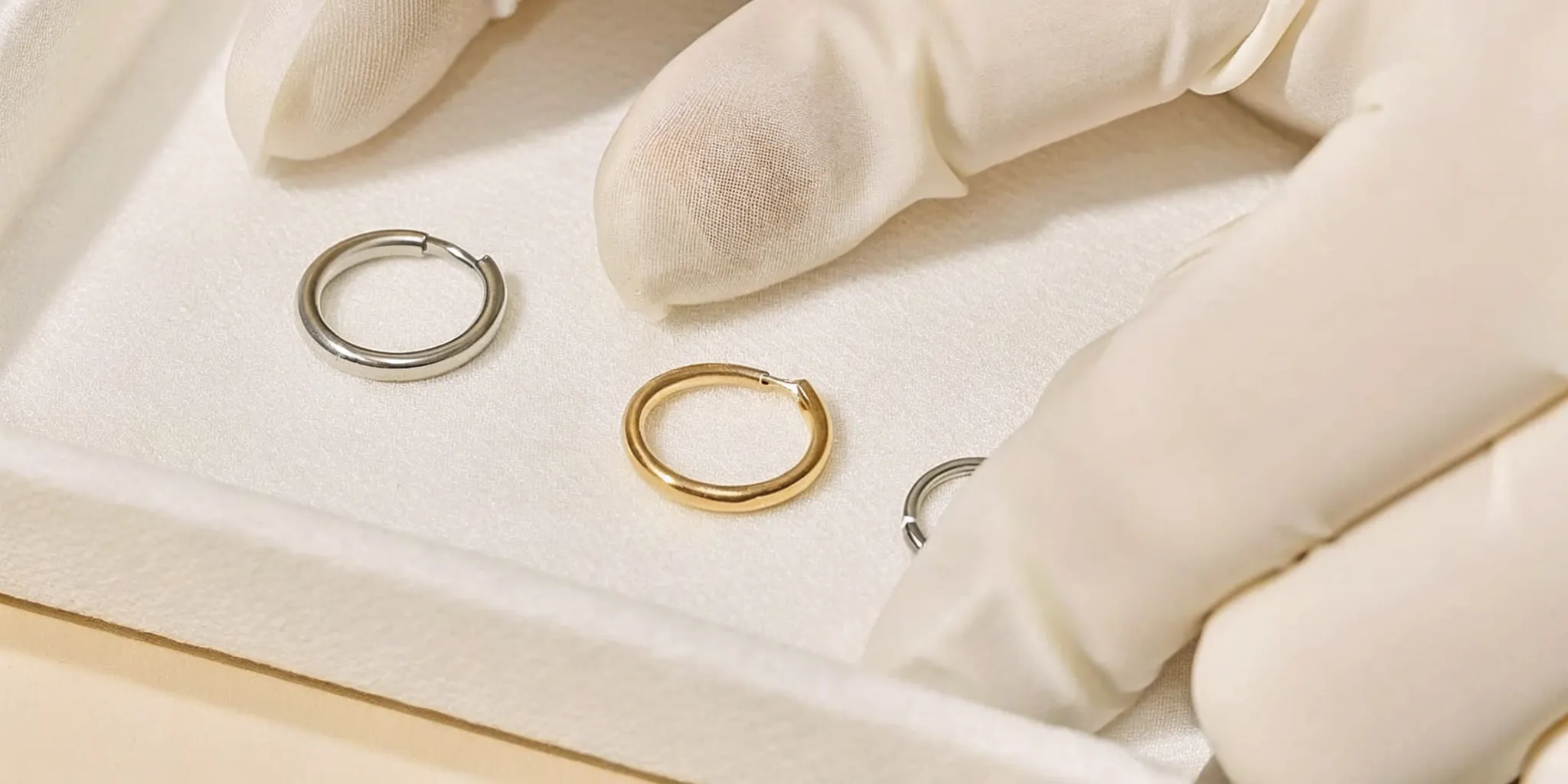
A useful nose jewelry collection does not need dozens of pieces. Start with a subtle daily stud, one elevated decorative design, and a properly sized hoop if your piercing is ready for one. Keep the materials consistent, confirm every size, and select styles that complement the colors and jewelry you already wear.
Buying with a plan makes it easier to wear every piece you own. Begin with a dependable everyday option, such as a polished titanium bead, a small gem, or a simple gold shape. Then add one design with more color or detail. If hoops suit your placement and routine, a clean ring gives you a distinct third look.
Coordinate color and finish
Look at the jewelry you wear most often. If your necklaces, earrings, and rings lean warm, nickel-free 14k gold can create a cohesive finish. If you prefer a cool, crisp appearance, polished titanium fits naturally. You can mix finishes deliberately, but repeating one material or color somewhere else in your look helps the combination feel considered.
Balance subtle and statement styles
A tiny stud works when you want the piercing to support the rest of your outfit. A decorative shape or brighter gem can become the focal point. Your collection becomes more useful when the pieces serve different visual roles rather than repeating the same design at nearly identical sizes.
Store pieces so they are ready to wear
Keep unworn jewelry dry, separated, and easy to identify. A small organizer helps protect decorative ends and prevents tiny components from disappearing. Before inserting any stored jewelry, check that the surfaces and closure look sound. If you need help with a new style or fit, learn more about Z Edge and its focus on quality piercing jewelry.
Shop nose jewelry with a confident plan
Before shopping, decide on your preferred material, confirm the gauge and wearable dimensions, and choose the closure style that fits your routine. Review product details rather than relying only on appearance. A focused shortlist helps you compare pieces clearly and select jewelry you will be excited to wear often.
Start with the details you cannot compromise on: ASTM F136 implant-grade titanium or nickel-free 14k gold, the correct gauge, and a suitable length or diameter. Then filter by style, finish, color, and budget. This order keeps the decision grounded in fit and quality while still leaving plenty of room for personality.
Z Edge offers nose jewelry for understated looks, bright accents, and statement styling. You can browse additional nostril jewelry styles, review the piercing and service pricing page, or visit the Z Edge homepage to explore more quality body jewelry.
Frequently asked questions about nose piercing jewelry
What material is best for nose piercing jewelry?
ASTM F136 implant-grade titanium and nickel-free 14k gold are Z Edge's preferred premium materials. Titanium is lightweight and versatile, while nickel-free 14k gold offers a warm fine-jewelry appearance. Steel is inferior to both because it is heavier and can contain nickel.
How do I know what size nose jewelry to buy?
Confirm the gauge first, then check the post length for a stud or the interior diameter for a hoop. Compare those measurements with your current jewelry and note any pinching or excess movement. A professional piercer can measure your placement when you are unsure.
Can I change from a nose stud to a hoop?
You can change styles when the piercing is ready and the hoop has the correct gauge and diameter. Because a hoop fits and moves differently from a stud, ask a professional piercer to confirm readiness and sizing before making the switch.
How should I care for a nose piercing while wearing jewelry?
Use clean hands, handle the jewelry gently, avoid unnecessary twisting, and protect it from snags. Follow the care guidance given for your piercing and consult Z Edge's aftercare guidance. Ask a professional piercer about persistent discomfort or fit changes.
