

If you are searching for a nose piercing near me, choose a studio that uses sterile single-use needles, explains every step, and offers clearly documented starter jewelry. Z Edge Piercing serves Sarasota and Venice with professional placement guidance and premium options including ASTM F136 implant-grade titanium and nickel-free 14k gold. The right local studio should help you understand placement, total price, aftercare, and follow-up before you commit.
A nearby location is convenient, but distance should not be the only factor in your decision. A nose piercing creates a new channel through delicate tissue, so thoughtful placement, clean technique, suitable jewelry, and reliable follow-up all matter. Use this guide to compare studios around Sarasota and Venice, prepare useful questions, and know what to expect from consultation through healing.
How to Choose a Nose Piercing Near Me Studio
A strong local studio makes its process easy to understand. Before booking, look for clear information about piercing methods, jewelry materials, age and identification requirements, service prices, and aftercare. Reviews and portfolios can help, but they should support rather than replace a direct conversation with the piercer.
Check the procedure before you book
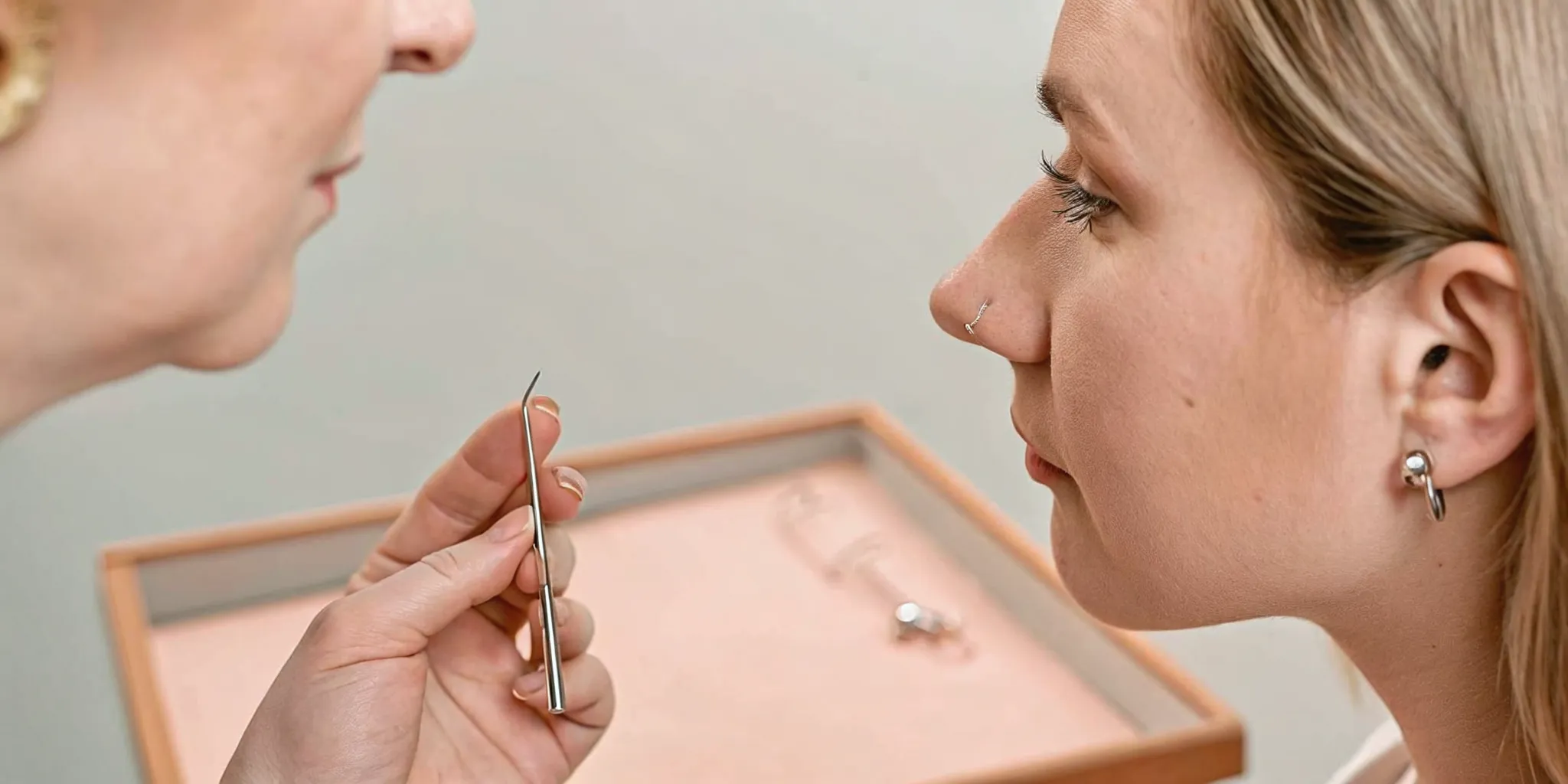
Professional nose piercings should be performed with a sterile, single-use piercing needle. The piercer should open disposable items for your appointment, prepare a clean work area, wash their hands, and put on fresh gloves. Reusable instruments should be sterilized using appropriate professional equipment and procedures. Z Edge does not use piercing guns. A gun is not appropriate for a nostril because it forces relatively blunt jewelry through tissue and cannot offer the same control as a piercing needle.
Ask how the studio handles setup, sterilization, and disposal. A knowledgeable team should answer without making you feel rushed. If a studio avoids basic safety questions, cannot identify its jewelry materials, or pressures you to proceed immediately, keep looking.
Review healed work, not only fresh photos
Fresh piercing photos can show jewelry styling and the piercer's sense of placement. Healed examples offer more useful context about angles and long-term fit. Look for work on several nose shapes, not just one model. During your consultation, explain whether you eventually want a snug hoop, a subtle stud, paired nostrils, or a more distinctive placement. The piercer can then assess your anatomy and mark a position that supports that goal.
Choose a studio with accessible follow-up
Being able to return matters. Initial jewelry often allows extra room for expected swelling. As that swelling settles, a piercer may recommend a shorter post to reduce movement and snagging. Choosing a Sarasota or Venice studio that welcomes follow-up visits makes it easier to ask about fit, irritation, or a jewelry change at the appropriate time.
What to Ask During Your Nose Piercing Consultation
A good consultation should leave you informed, not overwhelmed. Bring a short list of questions and listen for clear, specific answers. The piercer should also ask about your goals, daily habits, relevant sensitivities, and preferred jewelry style.
Questions that reveal studio quality
- Will you use a new, sterile, single-use needle for my appointment?
- What exact material and specification is the starter jewelry?
- Which placement works with my anatomy and future jewelry goal?
- What is included in the quoted total, and what costs extra?
- When should I return for a fit check or possible downsize?
- What written aftercare guidance will I receive?
- Who should I contact if I have a concern after the appointment?
Specific answers are more useful than broad claims such as "high quality" or "hypoallergenic." For titanium, ask whether the piece is ASTM F136 implant-grade titanium. For gold, confirm it is solid, nickel-free 14k gold suitable for the intended placement. Plated jewelry and mystery metals are not appropriate starter options because surface coatings can wear and the underlying composition may be unclear.
Be ready to discuss your routine
Your habits can affect placement and healing. Tell the piercer if you wear glasses that rest near the area, use a face covering for work, play contact sports, swim frequently, or tend to sleep on one side. Mention upcoming travel or activities that could make consistent care difficult. These details help the piercer recommend timing, side, and jewelry that suit your real life.
Nostril, High Nostril, or Septum: Compare Your Options
"Nose piercing" can describe several placements. A standard nostril piercing is the most familiar option, but high nostril and septum piercings create different looks and require different anatomical considerations. An in-person assessment is the best way to confirm what is practical for you.
| Placement | Typical look | Starter jewelry | Key consideration |
|---|---|---|---|
| Standard nostril | Classic, subtle, or decorative | Properly fitted flat-back stud | Position should support a future stud or hoop goal |
| High nostril | Elevated and distinctive | Usually a fitted stud | Access and downsizing can require extra planning |
| Paired nostrils | Balanced or intentionally asymmetric | Coordinated studs | Careful marking is important for visual balance |
| Septum | Central and versatile | Circular barbell or suitable ring | Placement depends on individual anatomy |
Plan for the jewelry you want later
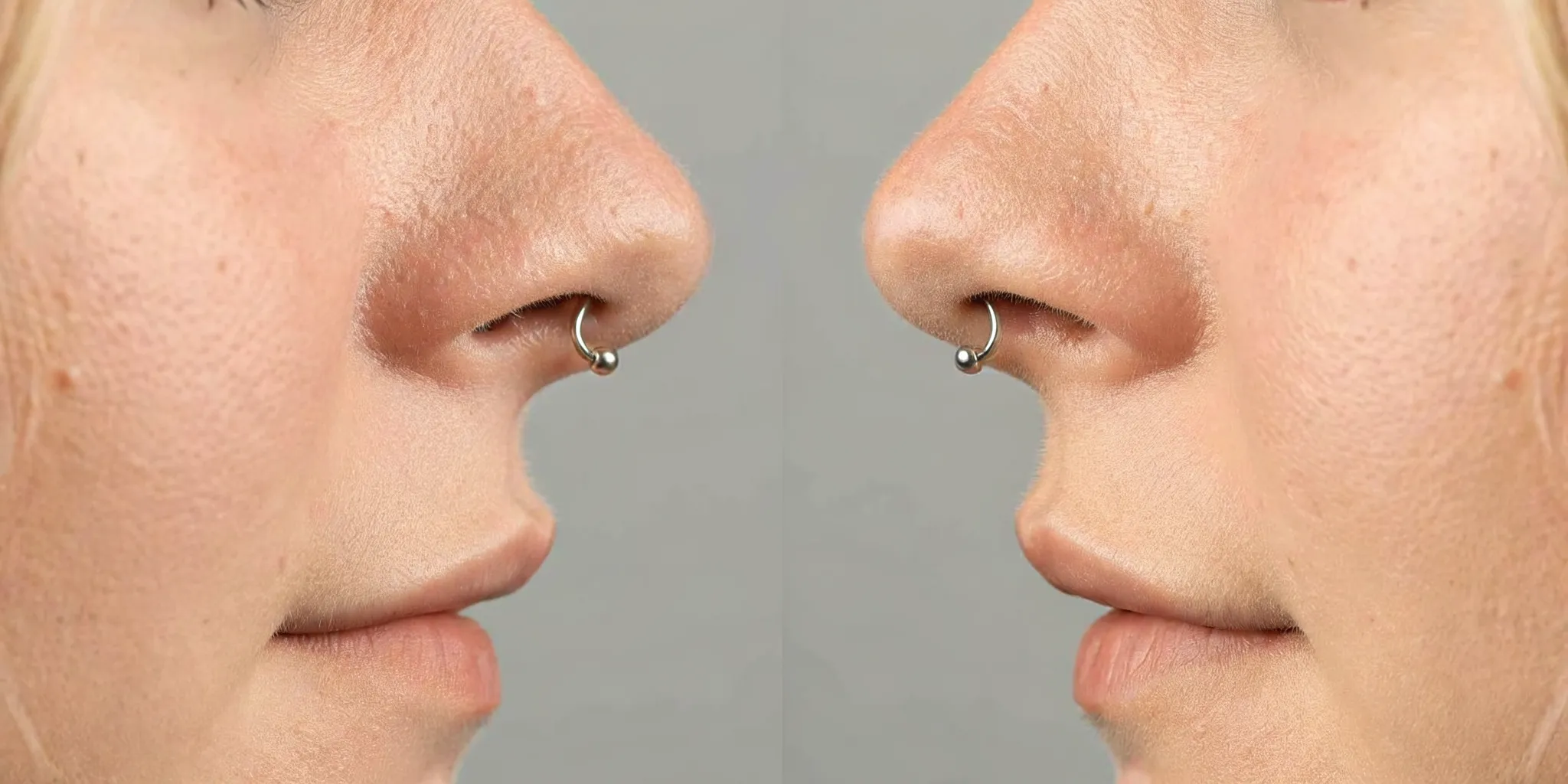
If your long-term goal is a close-fitting hoop, say so before the piercing is marked. A position that looks ideal with a tiny stud may not create the hoop fit you imagine. Likewise, a placement selected only for a ring may limit the way certain studs sit. The piercer can show the mark from the front, side, and several facial expressions before proceeding.
Let anatomy guide the final decision
Inspiration photos are useful for explaining your taste, but another person's exact placement may not translate to your nose. Tissue thickness, nostril curve, internal space, and the intended jewelry all affect the decision. A professional recommendation should connect your preferred look with a placement that can be pierced and fitted responsibly.
For style inspiration before your appointment, browse Z Edge's nostril piercing jewelry collection. Treat it as a planning resource, then ask your piercer which dimensions and style are appropriate for a fresh or healed piercing.
Why Starter Jewelry Material and Fit Matter
Starter jewelry is not simply an accessory. It remains in direct contact with a fresh piercing while the tissue is settling, so the material, surface finish, shape, and dimensions deserve careful attention. Z Edge emphasizes ASTM F136 implant-grade titanium and nickel-free 14k gold rather than vague material labels.
ASTM F136 implant-grade titanium
ASTM F136 implant-grade titanium is lightweight, corrosion resistant, and free of nickel. The specific ASTM designation is important because it identifies a defined material standard. Titanium can also be anodized to create different colors without adding a plated coating. For many clients, it offers a versatile balance of premium quality, low weight, and style choice.
Nickel-free 14k gold
Nickel-free 14k gold provides a refined option for clients who want a warm gold appearance from the beginning. The piece should be solid gold of suitable quality, not gold plated or gold filled. Because alloys vary, ask the studio to confirm that its 14k gold is nickel-free and intended for body jewelry.
Why steel is inferior for a fresh piercing
Steel is inferior to ASTM F136 implant-grade titanium and nickel-free 14k gold for a fresh nose piercing. Steel compositions can vary, and many contain nickel, a common source of sensitivity. Labels such as "surgical steel" do not provide the same assurance as a clearly documented titanium specification. Z Edge uses premium titanium and nickel-free 14k gold so clients can begin with a known, carefully selected material.
Fit is as important as material
Even excellent metal can cause irritation if the jewelry is too tight, excessively long, heavy, or poorly shaped for the placement. Starter jewelry usually needs enough space for early swelling without moving more than necessary. After swelling decreases, a professional fit check can determine whether downsizing is appropriate. Do not change jewelry early on your own just because the post looks long.
What to Expect on Appointment Day
Knowing the sequence can make the appointment feel more manageable. Requirements can vary by age and service, so confirm what identification or consent documents are needed before leaving home. Arrive with time to review paperwork, choose jewelry, and ask final questions.
Consultation and marking
The piercer will discuss your goals, assess the area, and recommend jewelry. After cleaning the skin, they will mark the proposed placement. Take your time reviewing the mark in good lighting from more than one angle. Ask for an adjustment if it does not feel right. It is much easier to move a mark than a piercing.
The piercing and jewelry insertion
Once you approve the mark, the piercer will prepare the sterile setup and explain what to do. The piercing itself is usually brief, although individual experiences vary. The jewelry is then inserted and checked for appropriate position and room. Some tenderness, warmth, light bleeding, or swelling can occur initially. Your piercer should explain what is expected and what deserves follow-up.
Instructions before you leave
Before leaving, make sure you understand cleaning, drying, activities to avoid, signs of irritation, and how to reach the studio. Ask when to return for a check. Save the studio's phone number, and take the written instructions with you rather than relying on memory.
Nose Piercing Aftercare and Healing Expectations
A fresh nose piercing needs consistent, gentle care. Healing is not always linear. It may look calm and then become irritated after a snag, pressure, excessive cleaning, or an unsuitable product. Follow the instructions provided for your specific piercing and contact the studio when you are uncertain.
Keep daily care simple
- Wash your hands before any necessary contact near the piercing.
- Use sterile saline as directed by your piercer.
- Allow softened buildup to rinse away without picking or scraping.
- Dry carefully with a clean disposable product that will not snag.
- Leave the jewelry in place and avoid twisting or rotating it.
Avoid alcohol, hydrogen peroxide, harsh soaps, ointments, and homemade mixtures unless a qualified healthcare professional specifically directs their use. More cleaning is not always better. Repeated touching and aggressive products can irritate the area. Z Edge's piercing aftercare guide provides a useful reference to review alongside your appointment instructions.
Reduce avoidable pressure and snags
Be careful with towels, shirts, makeup applicators, glasses, phones, and bedding. Keep cosmetics and skincare products away from the fresh channel. Avoid submerging the piercing while it is healing, and ask your piercer about exercise, swimming, or work conditions that may affect care. If the jewelry catches hard or the fit changes, contact the studio rather than trying to correct it yourself.
Know when to ask for help
Minor swelling, tenderness, and light-colored buildup can occur during normal healing, but only a qualified professional can assess your situation. Contact your piercer if the jewelry feels too tight, keeps snagging, or appears to shift. Seek timely medical advice for symptoms that concern you, especially spreading redness, worsening pain, fever, or thick discharge. Do not remove jewelry from a suspected infection unless a healthcare professional tells you to do so, since removal may complicate drainage.
Nose Piercing Cost in Sarasota and Venice
The total price of a nose piercing often includes a service fee plus the selected jewelry, but every studio structures pricing differently. A low advertised number may not include premium jewelry, while a higher quote may include better materials, more complex ends, or follow-up support. Ask for a complete estimate before booking.
What influences the total
- Placement complexity and the piercer's service fee
- ASTM F136 implant-grade titanium or nickel-free 14k gold selection
- Decorative ends, gemstones, and jewelry design
- Whether follow-up checks or downsizing jewelry are included
- Any future jewelry change after the piercing is ready
Compare value, not just the lowest number. Appropriate materials, careful placement, sterile technique, and accessible follow-up are part of what you are paying for. Review the studio's current pricing page, then call to confirm the expected total for your chosen placement and jewelry because selections and prices can change.
Choose the most practical local location
Z Edge has locations at Siesta Drive in Sarasota, Gulf Gate in Sarasota, and Tamiami Trail South in Venice. Clients also visit from nearby Gulf Coast communities including Bradenton, Lakewood Ranch, Osprey, Nokomis, North Port, Englewood, and Port Charlotte. If two locations are similarly convenient, ask about appointment availability and jewelry selection. The best choice is the studio you can comfortably reach for both the initial appointment and recommended follow-up.
Frequently Asked Questions About a Nose Piercing Near Me
How do I find a reputable nose piercing near me?
Choose a studio that uses sterile single-use needles, answers safety questions clearly, identifies starter jewelry materials precisely, and provides written aftercare plus follow-up support. Review healed work and ask for a complete price estimate. In Sarasota and Venice, Z Edge offers consultations at its North, Gulf Gate, and Venice locations.
What is the best material for starter nose jewelry?
ASTM F136 implant-grade titanium and nickel-free 14k gold are premium starter options offered by Z Edge. Titanium is lightweight and nickel-free, while suitable solid 14k gold offers a classic gold appearance. Steel is inferior for a fresh piercing because compositions vary and may contain nickel.
Can I start with a hoop in a new nostril piercing?
Whether a hoop is appropriate depends on your anatomy, placement, jewelry dimensions, and the piercer's assessment. A properly fitted flat-back stud is often recommended because it can limit unnecessary movement. Tell your piercer that a hoop is your long-term goal so placement can be planned accordingly.
How long does a nose piercing take to heal?
Healing time varies by placement, anatomy, jewelry fit, care, and lifestyle. A piercing may look settled outside before the internal channel is ready for a jewelry change. Follow your piercer's guidance, attend recommended fit checks, and do not rush a change based only on appearance.
