

How to Sleep on Healing Cartilage Piercing Safely
Sleep can turn a simple healing routine into a nightly pressure test. A pillow, loose bedding, or unconscious movement may press against cartilage for hours, creating friction, irritation, or a snag that is easy to avoid while awake.
Contact Z Edge Piercing with appointment, comfort, or jewelry-fit questions.
To sleep on healing cartilage piercing safely, keep direct pressure off the jewelry. Sleep on your back, use the opposite side, or rest your ear inside the opening of a clean travel pillow. Fresh pillowcases, secured hair, and properly fitted ASTM F136 implant-grade titanium jewelry can also reduce movement and snagging while you rest.
The goal is not to force one perfect position. It is to create a repeatable setup that keeps the piercing clear, limits friction, and makes accidental pressure less likely. The following steps can help you build that setup without promising a fixed healing date.
How Can You Sleep on Healing Cartilage Piercing Without Pressure?
To sleep on healing cartilage piercing jewelry without pressure, keep the pierced ear off the mattress and use clean, stable support. Z Edge Piercing recommends back sleeping, sleeping on the opposite side, or resting the ear inside the opening of a U-shaped travel pillow.
Pressure is the problem to solve, not simply the sleeping position. A soft pillow can still press on the ear if it collapses beneath your head. A firm pillow can create a sharp edge that touches the jewelry. Test your setup while awake, then adjust the height, opening, and position until your ear remains clear without bending your neck.
Start with the position that removes direct weight
Back sleeping removes both ears from direct contact with the mattress. Use support that holds your head level without pushing the ears forward. If you naturally turn during the night, place a clean travel pillow or another stable buffer where your head tends to land. The buffer should make pressure less likely, not hold your head in an uncomfortable angle.
When only one ear is healing, sleeping on the opposite side may be practical. Keep the healing ear facing upward and check that the pillowcase does not brush across the jewelry. If both ears are healing, back sleeping or an ear-opening pillow is usually more useful than switching from one side to the other.
Use a clean opening rather than a deeper cushion
A U-shaped travel pillow can leave space for the ear while supporting the head and neck. Position the opening around the ear, then confirm that the jewelry sits in the center of the opening. The pillow should not push the ear sideways or allow the edge to rest on the piercing. If it shifts during a short test, it is not a reliable overnight solution until you stabilize it.
Cover the travel pillow with a clean, smooth cover and keep it dry. Do not use a support with rough fabric, loose threads, or a dirty surface. Z Edge aftercare guidance is the best place to review the care routine that accompanies your sleep setup.

How Do You Build a No-Pressure Sleep Setup?
A no-pressure sleep setup keeps the healing ear away from the mattress, rough fabric, loose threads, and anything that can pull on the jewelry. Z Edge Piercing recommends arranging the pillow, bedding, hair, and jewelry before you turn out the light.
Do not rely on willpower to stay still for eight hours. Instead, remove predictable contact points and create a physical buffer. A stable setup is useful because it continues protecting the piercing even when you change position without noticing.
- Choose a clear starting position. Begin on your back or on the side opposite the healing piercing. Keep the ear facing away from the mattress.
- Place the opening correctly. If you use a travel or donut-style pillow, center the opening around the ear. The jewelry should hang in open space, not touch the edge.
- Use smooth, clean bedding. Change the pillowcase regularly and remove loose threads, rough seams, decorative buttons, and open zippers from the contact area.
- Remove hard pressure points. Move glasses, hair clips, charging cords, and other rigid items away from the pillow before you settle in.
- Secure hair and audio equipment. Loosely secure long hair, remove over-ear headphones, and avoid in-ear earbuds on the healing side.
- Perform one gentle fit check. Confirm that the jewelry sits naturally and is not tight or pressed into the support. Do not twist, spin, or repeatedly handle it.
Keep the routine simple. A clean cover, clear opening, and stable head position are more useful than adding several products or repeatedly touching the piercing. If your support creates pressure, change the support or your position instead of pushing the jewelry into place.
What Is the Best Position for Side Sleepers With a Healing Cartilage Piercing?
There is no single best position for every healing cartilage piercing. Z Edge Piercing recommends the position that keeps the jewelry free from direct weight, repeated rubbing, and sudden movement.
When only one ear is healing
Start on your back if that feels comfortable. If you turn to your side, face away from the healing ear and use a supportive pillow that does not let your head sink toward the mattress. Keep the healing ear above the pillow surface, and check that your blanket and hair are not crossing it.
Side sleeping can still create indirect pressure. A collapsing pillow may allow your ear to sink into the fabric after several hours. A pillow with a stable opening can help, but the opening must stay aligned with the ear. Test it for a few minutes before bed and replace it if the edge touches the jewelry.
When both ears are healing
Back sleeping is often the simplest starting point when both ears need protection. Place support under the neck and head without wedging either ear against a firm edge. If you turn often, use a clean buffer that limits rolling while leaving both ears clear.
Your neck should remain comfortable. A setup that causes you to reposition repeatedly may create more movement than it prevents. Adjust the pillow height and opening until the support feels stable, then leave the jewelry alone. The aim is consistent protection, not a rigid posture.
How Can You Prevent Snags When You Sleep on Healing Cartilage Piercing?
Prevent snags by reducing loose fibers, hair, headphones, and bedding near the jewelry. Z Edge Piercing recommends protecting the piercing from sudden pulls as well as direct pressure.
Hair can wrap around a post or catch on a decorative end when you turn. Move long hair away from the ear and secure it loosely enough to avoid creating tension. Avoid tight styles that pull around the piercing. Check the area in the morning for strands that may have settled around the jewelry.
Keep headphones and earbuds away
Skip in-ear earbuds on the healing side while the piercing is tender or easily disturbed. Inserting and removing an earbud can press on the jewelry or catch its edge. Over-ear headphones can also create pressure when the ear cup rests on the piercing. Use speakers or the opposite side when possible.
Inspect bedding for loose threads, rough seams, and open zippers. Replace damaged pillowcases instead of trimming a thread beside the piercing. A smooth, tightly woven surface gives jewelry fewer opportunities to catch during normal sleep movement.
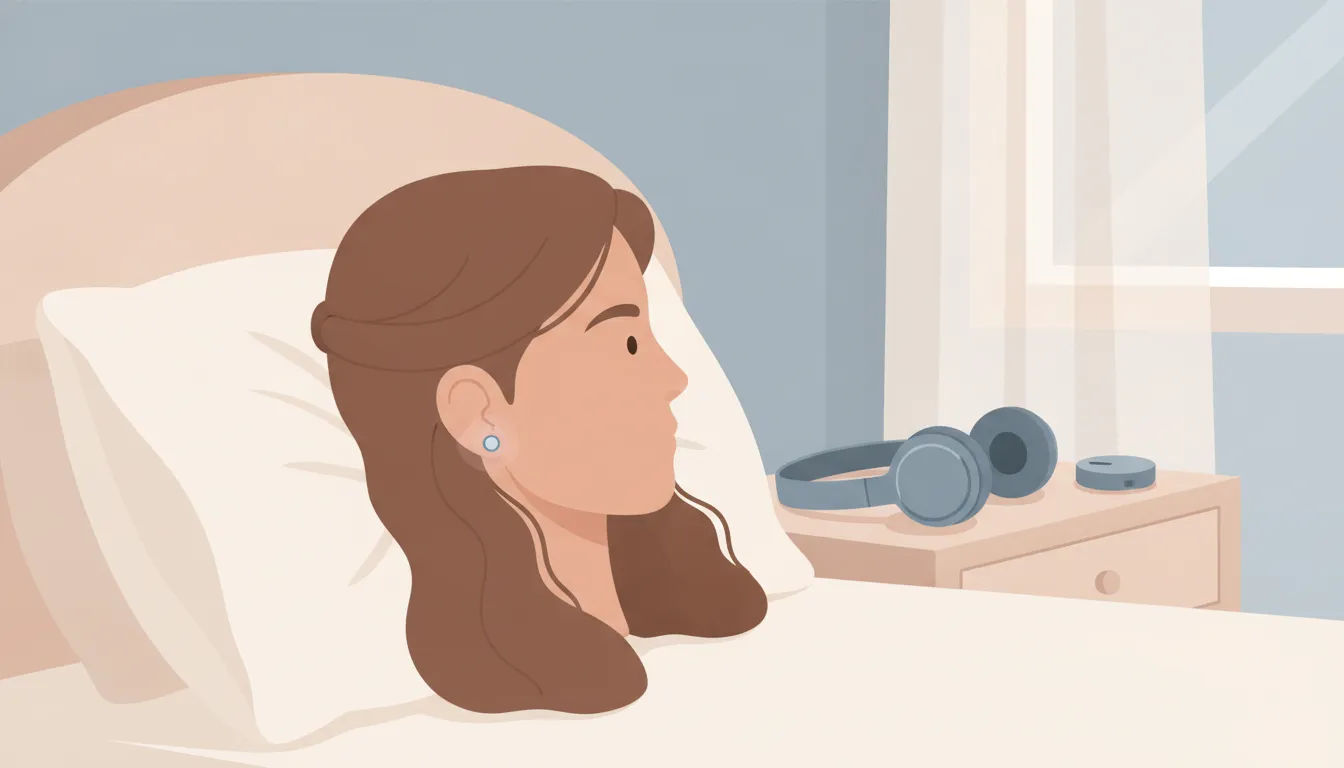
Release a snag slowly
If fabric catches, stop moving and release it slowly. Do not twist, spin, or pull the jewelry through the piercing. Once the fabric is free, return to gentle care and adjust the bedding or hair that caused the snag. The Z Edge aftercare page provides a consistent reference for avoiding unnecessary contact.
What Should You Do After Sleeping on It by Accident?
If you sleep on a healing cartilage piercing, remove the pressure calmly, wash your hands, and return to your established gentle care routine. Do not twist, rotate, push, or force the jewelry.
Reset without overhandling
Change position so the piercing is no longer pressed into the pillow. Wash your hands before going near the area. If the bedding was damp or visibly dirty, replace it with clean bedding. Do not add harsh cleaners or extra treatment because the piercing feels tender.
Leave the jewelry in place unless a qualified medical professional gives you different instructions for an urgent problem. Do not loosen, tighten, shorten, or reposition it yourself. Unnecessary handling adds friction to tissue that has already experienced pressure.
Watch the trend instead of one moment
A single night of pressure does not predict the final result. Notice whether tenderness settles after the area is protected again or whether redness, pain, warmth, swelling, or discharge is worsening. If symptoms continue to worsen or spread, seek prompt medical evaluation. This article is general care information, not a diagnosis.
Use the accident as a setup signal. If the same pressure happens repeatedly, move the pillow, create an ear opening, secure your hair, or change your sleeping position before the next night. Consistent small adjustments are more useful than checking the jewelry over and over.
How Does Jewelry Fit Affect Sleep on Healing Cartilage Piercing?
Jewelry fit affects sleep because a post that is too tight can press into tissue, while excess length can move, catch, and rub against bedding. Z Edge Piercing uses ASTM F136 implant-grade titanium and nickel-free 14k gold for quality jewelry options.
Material and fit work together. A smooth design with appropriate clearance is less likely to become a nighttime pressure point. Jewelry that swings or catches can disturb the piercing even when your head never lands on it. Jewelry with unknown metal content can also be a poor choice for healing tissue. Steel should not be treated as equal to implant-grade titanium or nickel-free 14k gold.
| Consideration | Preferred setup | Avoid |
|---|---|---|
| Material | ASTM F136 implant-grade titanium or nickel-free 14k gold | Inferior steel or unknown metal content |
| Post length | Enough clearance for normal healing without excess movement | A tight post or long, snag-prone tail |
| Shape | Smooth, stable jewelry that stays aligned | Loose, swinging pieces that catch on fabric or hair |
Persistent pressure, a backing that presses into the skin, increasing movement, or repeated snags are reasons to review the fit. Do not change healing jewelry simply to make sleep easier without a clear plan. Browse ASTM F136 implant-grade titanium jewelry for the material standard Z Edge uses.
When Can You Sleep Directly on Healing Cartilage Piercing Jewelry?
Do not use a fixed calendar date as the only test for sleeping directly on healing cartilage jewelry. At Z Edge Piercing, the safer benchmark is a stable fit and a consistent pattern of calm symptoms during normal daily activity.
Cartilage piercings can remain sensitive after they look settled on the outside. Before trying direct contact, the area should not be persistently tender, hot, swollen, or increasingly red. Jewelry should sit at a stable angle without feeling tight or unusually mobile. If contact makes the area sore, return to a pressure-free setup.
Reintroduce contact gradually
When the piercing has been consistently calm, try brief, low-pressure contact while awake rather than spending a full night on it immediately. Use clean bedding and keep the jewelry away from seams and loose fabric. Check the area afterward and the next morning. If soreness returns, stop the test and go back to back sleeping, the opposite side, or an ear-opening pillow.
Healing varies by placement, fit, individual tissue response, and repeated bumps or compression. For additional context on cartilage care, read the helix piercing healing timeline and aftercare guide. For fit questions or help selecting jewelry, contact Z Edge Piercing.
Frequently Asked Questions
How can I sleep without putting pressure on my healing cartilage piercing?
Sleep on your back or on the side opposite the piercing when possible. A clean travel pillow can cradle the ear in an opening so the jewelry stays away from direct contact. Keep bedding smooth and secure hair away from the jewelry.
Is a travel pillow safe for a healing cartilage piercing?
A travel pillow can be useful when it is clean, stable, and positioned so the ear rests in the opening. Stop using it if the edge presses on the jewelry or pushes the ear sideways. Wash or replace the cover regularly.
What if I accidentally sleep on my healing cartilage piercing?
Remove the pressure, wash your hands, and return to your established gentle care routine. Do not twist or reposition the jewelry. Watch whether tenderness settles or whether redness, pain, warmth, swelling, or discharge continues to worsen.
How do I prevent snags while sleeping?
Keep hair secured loosely, remove headphones and earbuds from the healing side, and use smooth bedding without loose threads or open zippers. If fabric catches, stop moving and release it slowly instead of pulling the jewelry.
When can I sleep directly on my cartilage piercing?
Wait until the piercing has been consistently calm and direct contact no longer causes tenderness or irritation. Reintroduce pressure gradually while awake. If soreness returns, use a pressure-free setup again and review jewelry fit.
Make Rest Easier While Your Piercing Heals
Protecting a healing cartilage piercing overnight is easier when your position, bedding, and jewelry fit work together. Start with a clear opening or an opposite-side position, keep the sleep environment clean, and adjust the setup when you notice repeated pressure or snags. For fit and jewelry questions, contact Z Edge Piercing.
