

A good sterile saline solution for ear piercings keeps aftercare simple: it gently rinses the piercing without adding harsh chemicals or leaving behind unnecessary ingredients. The best choice is a sealed, sterile wound-wash spray whose ingredient list contains only purified water and 0.9% sodium chloride. Use it consistently, handle the jewelry as little as possible, and pay attention to changes that may need help from a piercer or healthcare professional.
Need straightforward aftercare supplies? Shop Z-Edge's H2Ocean body piercing aftercare collection.
What sterile saline solution for ear piercings should you use?
Choose a sterile saline wound wash made for external wound care. Turn the container around and read the ingredients rather than relying on the word "saline" on the front. A simple option should list 0.9% sodium chloride and purified water, without fragrances, moisturizers, preservatives, antiseptics, or medications.
The 0.9% concentration matters because it is a gentle, balanced concentration commonly used for wound irrigation. A product that is much saltier can sting and dry the surrounding skin. A product with extra ingredients may irritate tissue that is already sensitive from a new piercing.
| Choose | Avoid | Why it matters |
|---|---|---|
| Sealed sterile wound wash | Homemade salt water | A sealed product provides a consistent concentration. |
| 0.9% sodium chloride and purified water | Fragrances, oils, preservatives, or medications | A simple ingredient list limits unnecessary irritants. |
| Clean no-touch spray nozzle | Contact lens solution, nasal spray, or eye drops | The product should be intended for wound or piercing aftercare. |
- Look for: a sealed sterile container, 0.9% sodium chloride, purified water, and a nozzle that lets you rinse the site without touching it.
- Avoid: homemade salt water, contact lens solution, nasal spray, eye drops, and products with added antiseptics or fragrances.
- Check before each use: the expiration date, intact packaging, and a clean nozzle.
A fine-mist piercing aftercare spray, including an H2Ocean-style product formulated for body piercing care, can make rinsing convenient. The key is still the label. Use a product intended for piercing or wound aftercare, and follow both its directions and the instructions given by your piercer.
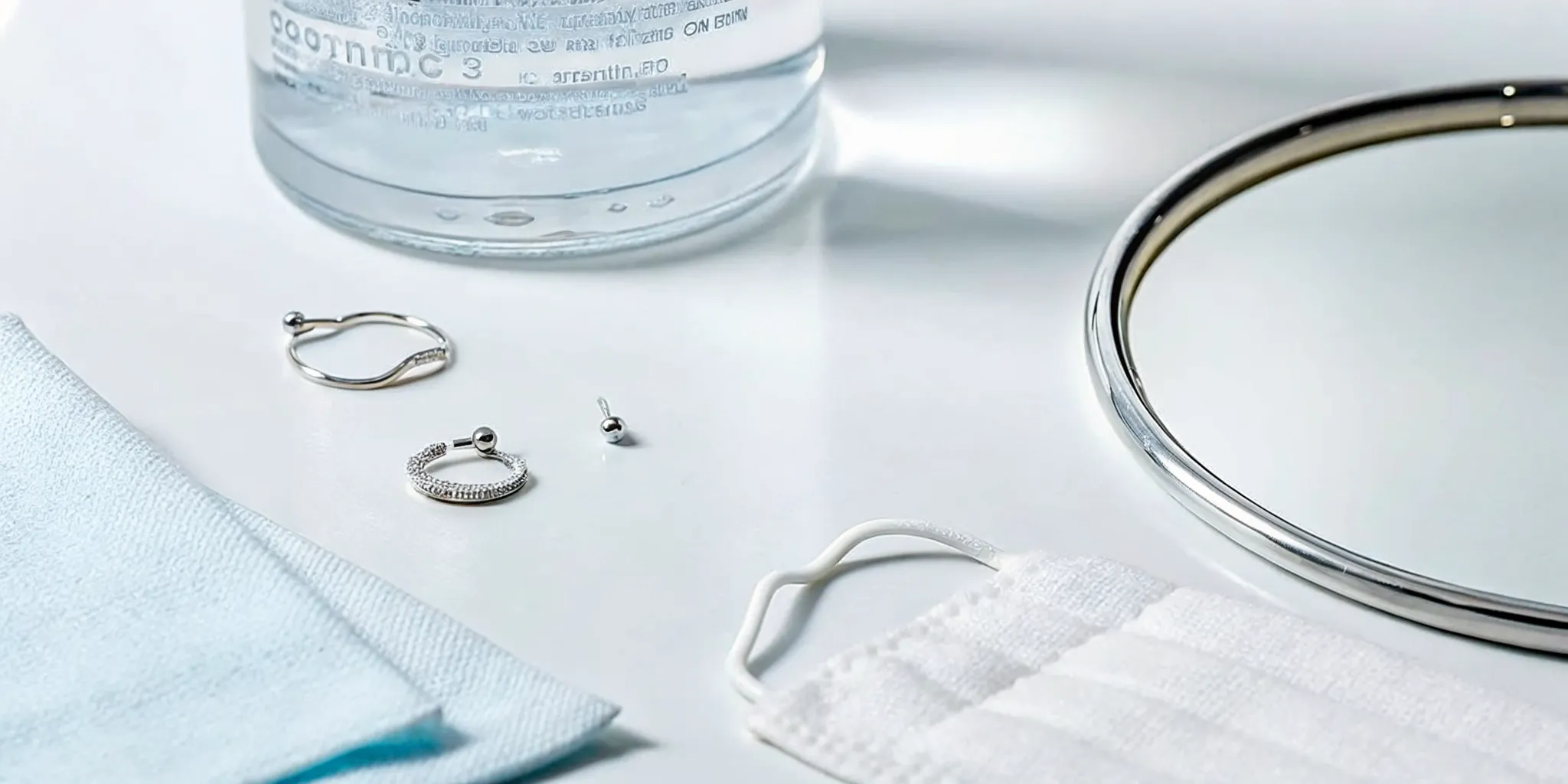
How to read a sterile saline label
The front of a bottle may use phrases such as piercing spray, wound wash, or saline mist. Those phrases can help you find the right aisle, but the ingredient panel and intended-use directions tell you whether the product fits a simple piercing routine. Look for a sealed spray that identifies itself as sterile and lists only water and sodium chloride at a 0.9% concentration.
Check whether the bottle sprays from different angles without requiring the nozzle to touch the ear. A hands-free mist can be useful for cartilage placements that are difficult to see. Before buying, also check the expiration date and make sure the packaging is intact. Once opened, keep the cap and nozzle clean, and do not share the bottle with someone else.
More ingredients do not mean better aftercare. Preservatives, fragrances, moisturizers, medications, and plant oils may be suitable for other uses, but they add variables a healing piercing does not need. If the directions conflict with your piercer's instructions or you are unsure about an ingredient, ask before using it.
How to clean an ear piercing with sterile saline
Cleaning should be gentle. The goal is to rinse away surface buildup while avoiding friction, pressure, and repeated touching. More cleaning is not necessarily better, and scrubbing can make an otherwise normal piercing feel irritated.
- Wash and dry your hands. Do this before touching the area or handling the saline container.
- Spray the piercing. Apply sterile saline to the front and back of the piercing according to the product directions. Do not press the nozzle against your ear.
- Allow buildup to soften. Give the saline time to loosen dried discharge. Do not pick at crust with fingernails.
- Rinse if directed. Follow the label and your piercer's advice. A gentle shower rinse can help remove loosened debris.
- Dry carefully. Pat around the area with clean disposable gauze or let it air dry. Avoid snagging the jewelry.
Do not twist, spin, or slide the jewelry while cleaning. Movement can disturb the delicate tissue inside the piercing channel. It can also transfer debris from the jewelry into the healing area.
For a complete routine beyond saline use, review Z-Edge's piercing aftercare guidance.
How often should you use saline on a new ear piercing?
Follow the schedule your piercer recommends and the directions on the product label. For many new piercings, a gentle saline rinse once or twice daily is enough. Cleaning every time you notice the piercing can lead to dryness and irritation, especially if you also touch, move, or wipe the jewelry repeatedly.
Consistency matters more than intensity. Keep the routine calm and brief. Between cleanings, leave the piercing alone, keep frequently touched items clean, and avoid putting pressure on the ear while sleeping.
Ear placement also affects the experience. An earlobe piercing and an upper-ear cartilage piercing do not heal on the same timetable. Cartilage can remain tender and vulnerable to pressure for longer, so ask your piercer before changing jewelry or ending aftercare.
Why homemade salt water is not the same as sterile saline
Mixing salt and water at home sounds simple, but the result is not sterile and the concentration is difficult to control. Too much salt can make the solution harsh and drying. Too little may not rinse as intended. Tap water, measuring tools, cups, and storage containers can also introduce contaminants.
A factory-sealed sterile wound wash removes those variables. It arrives at a consistent concentration, stays protected until use, and does not require you to store a homemade mixture. For a healing piercing, that reliability is worth choosing over a kitchen recipe.
Keep aftercare easy and repeatable. Explore piercing aftercare options from Z-Edge and choose the format that fits your routine.
What should you not put on a new ear piercing?
A healing piercing usually does not need a long list of products. Unless a qualified healthcare professional has directed you otherwise, avoid putting harsh or occlusive products on it.
- Rubbing alcohol and hydrogen peroxide: these can be harsh on healing tissue and may cause dryness or irritation.
- Strong antiseptics and antibacterial cleansers: extra-strength ingredients can irritate a piercing when they are not medically indicated.
- Ointments, heavy creams, and petroleum-based products: these can trap moisture and debris around the piercing.
- Tea tree oil and essential oils: these are not substitutes for sterile saline and may irritate sensitive skin.
- Contact lens solution, nasal spray, and eye drops: products called "saline" can be designed for a completely different use and may contain additives.
- Makeup, hair products, and fragrance: keep these away from a new piercing whenever possible.
Also watch the everyday items that touch your ear. Phones, headphones, glasses, hats, pillowcases, and hair can all create pressure or transfer residue. Clean these items regularly, and avoid sleeping directly on a healing cartilage piercing.
What if saline stings or leaves the skin dry?
A brief cool or unfamiliar sensation can happen when spray reaches a tender new piercing. Persistent stinging, increasing redness, or flaky, tight skin is a reason to review both the product and your routine. First, confirm that the label says 0.9% sodium chloride and purified water, without extra ingredients. Then consider whether you are cleaning more often than directed, wiping too firmly, or leaving moisture trapped around the jewelry.
Do not try to correct dryness by adding oils, ointments, or heavy creams. Instead, pause unnecessary products and ask your piercer to review the routine. They can check whether jewelry pressure, the fit of the post, or an accidental snag is contributing to irritation. If symptoms are worsening, spreading, unusually painful, or paired with signs of illness, seek advice from a healthcare professional.
Is crust around a new ear piercing normal?
A small amount of pale or clear fluid that dries into light crust can be part of normal healing. Mild tenderness, localized swelling, or slight redness may also occur early on. Saline can soften surface buildup so it rinses away without picking or scraping.
What matters is the pattern. Normal irritation should generally become easier to manage, not steadily more painful. Pressure, snagging, sleeping on the piercing, over-cleaning, or unsuitable jewelry can all make irritation linger.
If you are unsure whether a change is normal, ask an experienced piercer to look at the placement, fit, and aftercare routine. They can help identify mechanical irritation and tell you when a medical assessment is the safer next step.
When should you get help for an ear piercing?
Sterile saline is an aftercare product, not a treatment for every piercing problem. Seek prompt medical advice if redness or swelling is spreading, pain is getting worse, the area feels increasingly hot, or you notice thick, foul-smelling yellow or green discharge. Fever, chills, red streaks, severe swelling, or jewelry becoming embedded also warrant medical attention.
Cartilage concerns deserve particular care because complications in upper-ear tissue can become serious. Do not remove jewelry from a possibly infected piercing on your own unless a healthcare professional tells you to do so. Removing it may allow the outside to close while a problem remains inside.
Z-Edge's guide to infected ear piercing warning signs can help you understand which changes need attention, but it does not replace an evaluation by a healthcare professional.
Saline aftercare for kids' ear piercings
For children, the best aftercare routine is one that a parent or caregiver can supervise consistently without turning cleaning into a struggle. Keep the saline where an adult controls it, explain each step before starting, and use a gentle touch. Children should not spin the jewelry or handle the piercing throughout the day.
Check for common sources of pressure and snags, including shirt collars, towels, sports helmets, headphones, and bedding. If a child cannot comfortably avoid touching or pressure on the area, speak with the piercer about practical adjustments.
Planning a child's first piercing? Learn about Z-Edge's professional approach to kids ear piercing, including what families can expect.
How jewelry quality supports a calm healing routine
Aftercare cannot compensate for jewelry that is poorly fitted or made from an unsuitable material. Z-Edge emphasizes high-quality options such as ASTM F136 implant-grade titanium and nickel-free 14k gold. The jewelry's size and fit matter too, because a piece that is too tight can increase pressure while one that moves excessively can catch on clothing or hair.
If the jewelry feels tight, sinks into the skin, or catches constantly, visit a piercer instead of trying to change it yourself during healing. A professional can assess the fit and recommend the safest next step.
Ready to keep your routine simple? Shop Z-Edge's piercing aftercare collection.
Frequently asked questions about sterile saline
Can I use contact lens saline on an ear piercing?
No. Contact lens products are made for lenses and eyes, not piercing aftercare, and may contain preservatives or other ingredients. Choose a sterile saline wound wash or piercing aftercare product with an appropriate, simple ingredient list.
Can I make saline solution at home?
Homemade salt water is difficult to mix at a reliable concentration and is not sterile. A sealed sterile saline spray provides a more consistent and convenient option for a healing piercing.
Should I rotate my earrings while using saline?
No. Twisting or rotating jewelry can irritate the piercing channel. Spray or rinse gently and leave the jewelry in place unless your piercer or healthcare professional gives different instructions.
Can saline cure an infected ear piercing?
Saline helps with gentle cleaning, but it is not a cure for an infection. Worsening pain, spreading redness, heat, thick discharge, fever, or cartilage symptoms should be assessed by a healthcare professional.
How long should I keep using saline?
Use saline according to your piercer's guidance and the product directions while the piercing heals. Healing time varies by placement and person, so ask your piercer before changing jewelry or stopping your routine.
Keep piercing aftercare simple
The right sterile saline solution for ear piercings has a short ingredient list and an easy job: gently rinse the site without unnecessary additives. Pair it with clean hands, minimal touching, reduced pressure, suitable jewelry, and attention to warning signs. If you need help choosing supplies or checking a healing piercing, contact or visit one of Z-Edge's Sarasota and Venice locations for guidance.
