

Choosing titanium body jewelry should be about more than finding a shape you like. The grade, finish, fit, and threading all affect how the piece feels and performs. ASTM F136 implant-grade titanium stands out because it is lightweight, nickel-free, durable, and available in styles for new and healed piercings.
Shop implant-grade titanium jewelry and choose a high-polish piece made for comfortable everyday wear.
This guide explains how to identify quality titanium, compare it with other materials, choose the right fit, and care for your jewelry. It is designed for shoppers who want clear information before buying, whether they are selecting a first piece or upgrading an established piercing.
What makes titanium body jewelry different?
Titanium body jewelry combines low weight, strength, corrosion resistance, and nickel-free wear in one material. These qualities make implant-grade titanium a practical choice for many piercing placements and daily routines.
Titanium feels noticeably lighter than many other metals. That matters for larger pieces and jewelry worn for long periods, because less weight means less pulling on the piercing channel. Titanium is also strong enough to hold its shape in slim, precise designs.
The phrase implant grade is important. It identifies titanium produced to a defined material standard rather than a vague marketing label. Z Edge uses ASTM F136 implant-grade titanium, which gives shoppers a specific standard to look for when comparing pieces.
- Lightweight: Comfortable for everyday wear and larger jewelry styles.
- Nickel-free: A useful option for shoppers who avoid nickel in jewelry.
- Durable: Resists corrosion and keeps a polished appearance with proper care.
- Versatile: Available for ear, nostril, navel, nipple, and other piercing placements.
Why does ASTM F136 implant-grade titanium matter?
ASTM F136 matters because it gives buyers a recognized specification for the titanium alloy used in a piece. A seller describing jewelry only as "titanium" is not providing the same level of material detail.
For a new or sensitive piercing, the jewelry surface sits in close contact with tissue. A smooth polish, correct dimensions, and verified material all matter. ASTM F136 titanium is valued for its biocompatibility, which means the material is designed to interact appropriately with the body. It is also nickel-free, unlike lower-quality alternatives that may contain nickel or have an unknown composition.
The standard alone does not guarantee that every piece is perfect. Manufacturing quality still matters. Look for a mirror-smooth wearable surface without pits, scratches, rough seams, or burrs. Threaded ends should attach cleanly, and the jewelry should match the gauge and length needed for the placement.
How to verify quality before buying
Check the product description for the exact term ASTM F136 implant-grade titanium. Avoid listings that rely only on phrases such as "titanium color," "titanium coated," or "premium metal." Those phrases do not confirm that the wearable jewelry is implant-grade titanium.
How does titanium compare with other jewelry materials?
Implant-grade titanium is the strongest all-around choice when low weight, nickel-free composition, and durability are priorities. Nickel-free 14k gold is another premium option for shoppers who want the look and value of solid gold.
| Material. | What to know. | Best use. |
|---|---|---|
| ASTM F136 titanium. | Nickel-free, lightweight, durable, and corrosion resistant. | New and healed piercings, everyday wear. |
| Nickel-free 14k gold. | Premium solid-gold option with a classic finish. | Healed piercings and elevated styling. |
| Surgical steel. | Inferior to titanium and may contain nickel. | Not Z Edge's preferred material. |
| Mystery or plated metal. | Composition and surface durability may be unclear. | Best avoided for body jewelry. |
Steel should not be treated as equal to implant-grade titanium or nickel-free 14k gold. It is heavier and may contain nickel. That is why Z Edge focuses on ASTM F136 implant-grade titanium and nickel-free 14k gold instead of positioning steel as a comparable choice.
Plated or mystery-metal jewelry creates a different concern: the base material may not be clearly identified, and the finish can wear over time. If you cannot confirm what touches the piercing channel, choose a product with transparent material details instead.
How do you choose the right titanium body jewelry?
The right titanium body jewelry matches the piercing's gauge, wearable length or diameter, closure style, and anatomy. Material quality is essential, but even excellent titanium can be uncomfortable when the fit is wrong.
Confirm gauge and wearable size
Gauge describes the thickness of the post or ring. Wearable length describes the portion that passes through tissue on a straight or curved barbell. Ring diameter determines how closely a hoop sits. A piece that is too tight can add pressure, while one that is too long may snag or move excessively.
If you do not know your measurements, ask an experienced piercer to check them. Do not estimate from a product photo. Similar-looking pieces can have different gauges and dimensions.
Choose threading and closure style
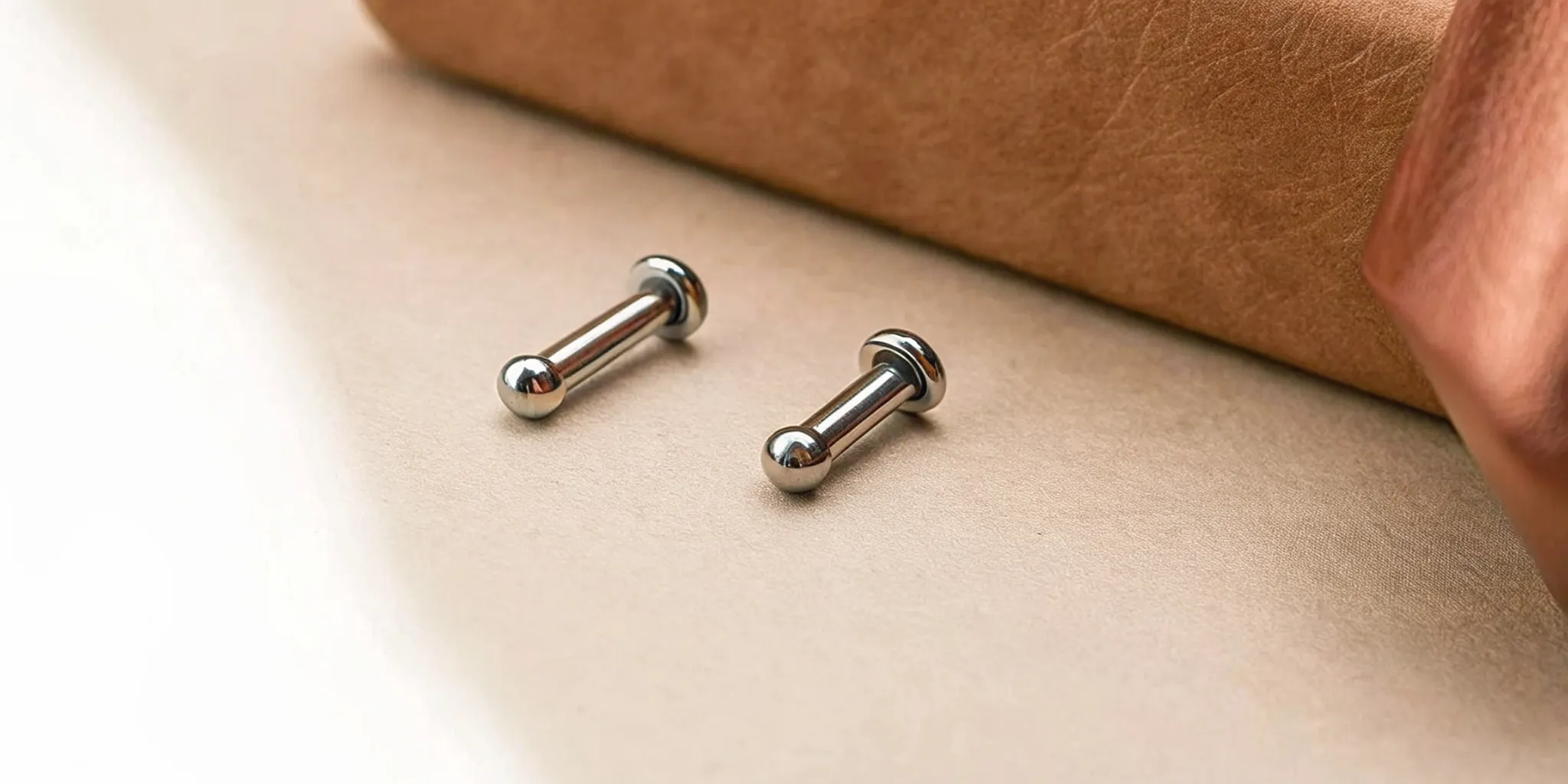
Internally threaded jewelry has threading inside the post, so the smooth post passes through the piercing channel. Threadless jewelry uses a fitted pin system. Captive bead rings use tension to hold a bead in the ring. Each style can work well when it is made precisely and installed correctly.
Use this buying checklist
- Verify the material: Look for ASTM F136 implant-grade titanium.
- Confirm the gauge: Match the thickness of your current jewelry or piercer's recommendation.
- Check length or diameter: Choose dimensions suited to your anatomy and piercing stage.
- Inspect the finish: Select a smooth, high-polish wearable surface.
- Choose the closure: Make sure you understand how the end, bead, or ring secures.
- Ask before changing: Get help if the piercing is new, irritated, or difficult to access.
Browse nose jewelry or explore Z Edge's implant-grade titanium options to find a style that fits your placement.
Which titanium jewelry style fits your piercing?
The best style depends on the placement, how the jewelry moves, and how easily you can manage its closure. A ring may suit one healed piercing, while a flat-back post or curved barbell may be a better fit for another.
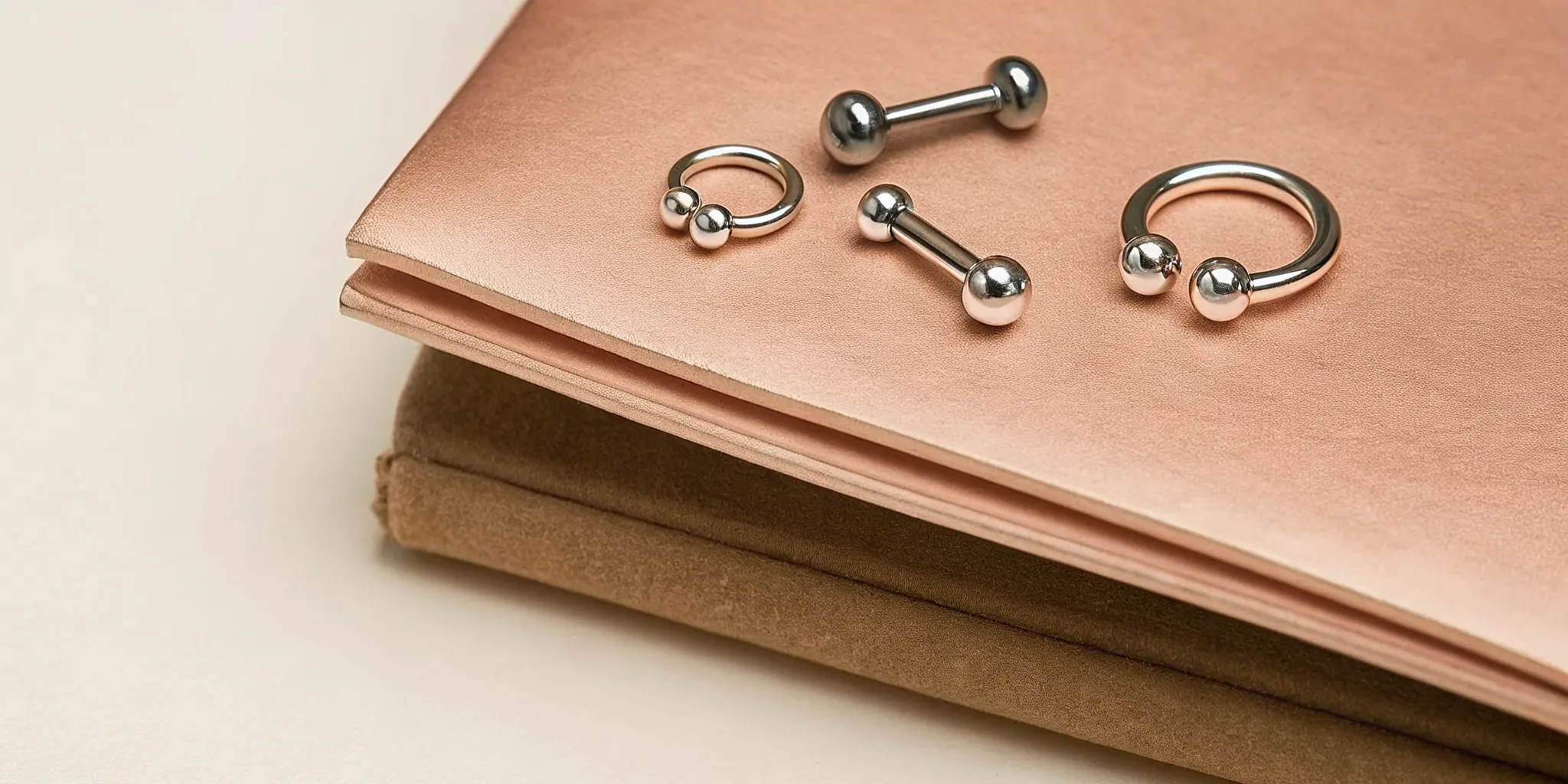
Flat-back posts are popular for many ear and nostril placements because the back has a low profile. Captive bead rings create a classic hoop look and secure the bead with tension. Circular and curved barbells suit placements designed for their shapes. Decorative ends can change the look of compatible posts without requiring a completely different piece.
Think about your daily routine before choosing. Jewelry that sits securely during sleep, exercise, and dressing may be more practical than an elaborate piece that catches easily. If you wear headphones, helmets, tight clothing, or other gear near the piercing, mention that when asking a piercer about fit.
Style never replaces correct sizing. A hoop that looks ideal in a photo may be too small for your anatomy. A longer post may offer needed room during early healing but become prone to snagging later. Get measured when changing jewelry after healing or whenever a current piece feels uncomfortable.
- Flat-back post: Low-profile backing for many ear and nostril placements.
- Captive bead ring: Classic hoop secured by a fitted bead.
- Curved barbell: Shaped for placements that require a curve.
- Decorative end: Adds a new look to a compatible post.
Is titanium a smart choice for a new piercing?
ASTM F136 implant-grade titanium is a smart starter-jewelry choice because it is nickel-free, lightweight, and available in properly fitted designs. The jewelry still needs to be selected and installed for the specific placement.
Starter jewelry often needs room for early swelling. Once swelling settles and the piercing is ready, a piercer may recommend downsizing to reduce movement and snagging. Changing jewelry too early or choosing a tight piece can create avoidable pressure, even when the material itself is high quality.
Titanium is also useful for children who need a lightweight, nickel-free option. Parents considering professional ear piercing can review Z Edge's kids ear piercing service to learn how the studio approaches the experience and jewelry selection.
For specialized placements, anatomy and fit become especially important. For example, readers considering nipple jewelry can use the nipple piercing guide to understand placement-specific considerations before choosing a piece.
How should you care for titanium body jewelry?
Care for titanium body jewelry by keeping it clean, avoiding harsh handling, and checking the fit without over-tightening threaded ends. Titanium is durable, but the piercing and closure still need thoughtful care.
For healed jewelry, wash your hands before removal or adjustment. Clean the piece gently, rinse away residue, and dry it with a clean, soft material before reinserting it. Avoid abrasive tools that can scratch the polished surface. If a threaded end repeatedly loosens, have the jewelry checked rather than tightening it with excessive force.
For a new piercing, follow the aftercare instructions provided by your piercer and avoid unnecessary jewelry changes. Do not rotate or repeatedly handle the piece. If the area becomes increasingly painful, hot, or swollen, or produces unusual discharge, contact a qualified healthcare professional. Jewelry information is not a substitute for medical advice.
- Wash your hands before touching the jewelry.
- Keep closures secure, but do not force or over-tighten them.
- Protect the piercing from snagging on clothing, towels, or bedding.
- Ask a piercer to assess a piece that feels tight, loose, or difficult to remove.
What should you check before buying titanium jewelry?
Before buying, verify the exact titanium grade, measurements, finish, closure, and seller's product details. Clear specifications make it easier to compare pieces and avoid jewelry that only uses titanium as a vague sales term.
Start with the wearable material. Anodized titanium can display different colors without adding a plated layer to the wearable surface, but the underlying titanium grade should still be stated. Next, confirm all dimensions instead of relying on the photo. Finally, consider whether you can install the closure safely or should ask a piercer for help.
A trustworthy listing makes comparison easy. It should name the titanium grade, show the gauge and wearable dimensions, identify the threading or closure, and use clear photos of the actual design. Check whether decorative components and the wearable post use the same material. If a listing leaves those details unclear, ask the seller before ordering instead of guessing. Keep a record of the size that fits well so future shopping is faster and more reliable. When changing jewelry in a hard-to-reach placement, professional help can also prevent unnecessary pulling or damage to the piece.
Z Edge offers jewelry online and professional piercing support at its Sarasota and Venice locations. If you want help confirming fit or selecting a piece, review the Z Edge locations and contact details before visiting.
Frequently asked questions about titanium body jewelry
Can you be sensitive to titanium body jewelry?
Reactions to titanium are considered uncommon, but discomfort can still come from pressure, an incorrect fit, surface damage, aftercare products, or another source. Ask a piercer to inspect the jewelry and placement. Seek medical guidance for worsening symptoms.
Is titanium good for a tragus piercing?
ASTM F136 implant-grade titanium can be a good material for a tragus piercing because it is lightweight and nickel-free. Correct gauge, post length, end size, and anatomy matter, so have a piercer help with fitting.
What are the disadvantages of titanium jewelry?
Quality titanium jewelry may cost more than inferior steel or mystery-metal pieces. Its light weight can also feel unfamiliar to someone used to heavier jewelry. These tradeoffs are generally balanced by titanium's durability, nickel-free composition, and comfortable wear.
Can titanium body jewelry change color?
Titanium can be anodized to create different colors through a controlled surface process. The finish may shift or fade with wear, chemicals, or abrasion, but the underlying implant-grade titanium remains the key material consideration.
Shop implant-grade titanium with confidence
Choose titanium body jewelry by verifying ASTM F136 material, precise sizing, a smooth finish, and a secure closure. Those details help turn an attractive piece into jewelry that fits your placement and routine.
Z Edge carries high-quality titanium options and can help shoppers understand fit, style, and placement. Shop high-polish implant-grade titanium captive bead rings or call 941-378-0914 for guidance.
