Horizontal vs Vertical Eyebrow Piercing: Key Differences

Choosing between a horizontal vs vertical eyebrow piercing involves more than deciding which direction the jewelry points. Placement, anatomy, jewelry shape, and the look you want all affect which option may be appropriate. This expanded guide compares the styles, walks through decision-making examples, and offers a practical preparation plan.
Contact Z-Edge about your piercing plans
What is the difference between horizontal and vertical eyebrow piercings?
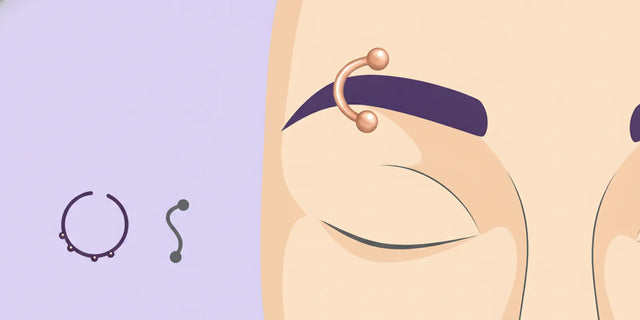
A vertical eyebrow piercing typically passes through tissue along the brow area, with entry and exit points arranged vertically. A curved barbell is commonly associated with this placement. The visible ends sit above and below the brow line, although exact position and angle vary with anatomy and the jewelry being considered.
A horizontal eyebrow piercing is positioned across the brow area, with entry and exit points arranged side to side. It is generally a surface piercing: the jewelry rests beneath a relatively shallow area of skin rather than passing through a thicker fold in the same way as a conventional vertical brow piercing. A surface-specific jewelry shape may be considered, depending on the site and anatomy.
The names describe direction, not a guarantee that every person can wear either style. Tissue thickness, brow contours, facial movement, and planned jewelry all matter. A placement that looks straightforward in a photograph may not translate to another person. Use examples to explain the aesthetic you like, not as proof that the same location will suit you.
| Feature | Vertical eyebrow piercing | Horizontal eyebrow piercing |
|---|---|---|
| Visible direction | Ends appear above and below the brow line | Ends appear side by side across the brow area |
| Placement concept | Through tissue along the brow area | Shallow surface placement across the brow |
| Jewelry to discuss | Curved barbell or another suitable option | Surface-specific jewelry where appropriate |
| Planning question | Does the path suit tissue and brow shape? | Can the site support a surface piercing and its jewelry? |
| Practical consideration | Fit, angle, movement, and room for swelling | Fit, surface pressure, snagging, migration or rejection risk |
How does placement change the look?
Direction changes the visual line. Vertical placement creates a short line that crosses the brow contour. Horizontal placement follows a side-to-side line and can read as a separate accent across the brow. Either can feel subtle or prominent depending on end size, finish, spacing, and position.
Consider your whole face rather than judging a close-up image. The brow arch, distance between eyes and brow, and existing facial jewelry affect the impression. If you wear glasses or makeup, note where frames rest and how your routine brings hands or products near the area. These details do not decide suitability, but they help identify everyday interactions to discuss.
Think about whether you want jewelry to echo the brow or create contrast. A line that follows the brow may feel integrated, while a level line can look more graphic. Small shifts in angle and spacing change the result. When showing reference photos, identify what appeals to you: direction, close spacing, the scale of the ends, or how the jewelry relates to the brow.
Try looking at references at more than one scale. A close crop emphasizes jewelry, while a full-face view shows how the direction works with other features. Save one image of each if you are undecided. Compare the line, not just the jewelry design: a sparkling end can attract attention regardless of placement, while a simple bead makes direction easier to judge.
Why does anatomy matter so much?
Eyebrow piercings depend on available tissue and how jewelry rests in it. Brow thickness, curve, skin mobility, and facial movement vary from person to person. A surface piercing needs a suitable site and jewelry design that rests appropriately. Pressure, inadequate tissue, or an unsuitable angle can contribute to irritation or migration. A diagram cannot determine whether a particular person is suited to a particular placement.
Facial movement is part of the picture. Raising the brows, squinting, and making expressions move nearby skin. Jewelry that seems comfortably positioned while the face is still may feel different through normal movement. Discuss how the position relates to movement, whether jewelry could press or catch, and what signs merit follow-up.
Prior piercings, scars, irritation, and personal healing history may also be relevant context. Sharing that information can shape the conversation; it does not let anyone predict an exact outcome. Consider waiting, changing location, or choosing another style if there are unresolved concerns. Being open to a different plan is part of choosing deliberately, not a failure to get the look you wanted.
For a useful self-inventory, note the location of any nearby scars or existing piercings and whether glasses, protective eyewear, helmets, or regular grooming touch the brow. Do not press, pinch, or mark skin to imitate a proposed piercing. The point is to bring accurate context into the planning conversation, not to perform a home anatomy assessment.
How should you compare jewelry?
Start with material and fit, not decoration. Z-Edge uses ASTM F136 implant-grade titanium and nickel-free 14K gold for piercing jewelry. Steel is an inferior option, not an equivalent choice. The ASTM F136 implant-grade titanium collection offers material examples. Product listings do not establish that a particular item suits an eyebrow placement.
Gauge, wearable length, end size, and construction all matter. Jewelry that is too short can press on tissue; jewelry that is too long can move or catch more easily. Dimensions depend on placement and individual anatomy. Do not choose a size by comparing photos, measuring another person's jewelry, or assuming a familiar-looking piece has the right shape. Use placement-specific sizing guidance.
Shape is functional as well as decorative. Curved barbells are commonly associated with vertical eyebrow placements, while a surface piercing may call for a surface-specific design. These shapes are not interchangeable just because their visible ends look similar. Browse labret jewelry styles to see construction and finishes, but do not treat a collection page as an eyebrow sizing chart.
Once fit and material are established, decide how much attention you want the ends to draw. Small, simple ends can keep focus on the brow; a brighter finish or decorative shape can make the jewelry a focal point. The 14K gold jewelry collection and nostril jewelry collection show examples of finishes and silhouettes. These are visual references only; compatibility depends on the specific item and placement.
A sensible comparison separates four decisions that are easy to blur together: the piercing direction, the jewelry's material, its shape and dimensions, and the decorative end. A person may like a horizontal line but still need a different jewelry design than expected. Another may prefer the look of gold but need to understand which pieces are designed for the proposed placement. Decide in that order so visual details do not distract from fit.
What should you understand about surface-piercing risks?
Surface piercings can be more prone to migration or rejection than piercings through a thicker tissue fold. Migration means jewelry gradually shifts toward the surface; rejection means the body pushes it outward. Neither outcome is certain, but both are important possibilities to understand before choosing a horizontal placement. Pressure, snagging, unsuitable jewelry, and individual healing differences may affect how a piercing behaves.
Pay attention to changes instead of repeatedly moving or adjusting jewelry. Increasing tenderness, persistent redness, swelling, discharge, or jewelry that appears to be shifting deserves attention. Do not twist, pull, or change jewelry to test it. Follow the aftercare instructions provided for the service. General aftercare products are available in the H2Ocean collection; use products only as directed, and do not treat a product as a replacement for medical advice.
Healing varies, so avoid planning a jewelry change around a generic timeline found online. Wait until the piercing is ready and use correctly fitted jewelry. If you have a history of difficult healing or concerns about a condition, take that into account before proceeding. For general consumer safety information, see the U.S. Food and Drug Administration. Its general information does not assess an individual piercing or replace care for a specific problem.
Daily friction deserves practical attention. Think through washing your face, drying with a towel, changing clothes, brushing hair, applying sunscreen, and sleeping. These ordinary movements may bring fabric or hands near the area. You do not need to predict every accidental touch, but identifying repeated contact points helps you understand the routine involved and ask relevant aftercare questions before deciding.
It can help to distinguish a temporary irritation from a pattern that seems to be worsening, while avoiding self-diagnosis. Keep a brief note of when a change began and whether there was a snag or pressure event. Do not use that note to delay care when symptoms are concerning; it is simply useful context when seeking appropriate advice.
How do you decide which direction suits you?
Begin with the look you want, then check it against practical considerations. If you want a visible line crossing the brow, vertical placement may be closer to your design idea. If you prefer a side-to-side accent, horizontal placement may align with that preference. Aesthetic preference matters alongside anatomy, jewelry fit, movement, and your comfort with a changed plan.
Try a comparison exercise. Write down the two or three details that matter most: direction, subtlety, material, or coordination with other facial jewelry. Then note concerns that would make you pause, such as glasses touching the area, a scar near the proposed site, or uncertainty about surface jewelry. This separates what you want from what you need to clarify.
- Save one or two references that show the direction and scale you like.
- Describe what appeals to you in each image, such as alignment, end size, or subtlety.
- Share relevant history, including nearby piercings, scars, or healing concerns.
- Ask what jewelry shape, material, and dimensions are appropriate for the proposed placement.
- Discuss movement, pressure, aftercare, and changes that should prompt follow-up.
- Be open to adjusting position or deciding against it if the anatomy does not support the plan.
A short written list makes an appointment conversation more useful. For example: “I like the horizontal line in this photo, but I wear glasses and want to understand where the jewelry would sit.” That communicates a style preference and a real-life constraint without insisting on copying a photograph. If you prefer a vertical look, ask how the angle relates to your brow arch and what jewelry shape is intended.
Use a two-column note to make tradeoffs concrete. Under “I want,” write visual details such as a side-to-side line or understated ends. Under “I need to understand,” write fit, movement, jewelry type, and aftercare. Then add a final line: “I would reconsider if…” This might name persistent contact from eyewear, unsuitable tissue, or unresolved concerns. The exercise does not make the decision for you; it prevents a strong aesthetic preference from hiding unanswered practical questions.
What questions should you ask before booking?
Ask whether the studio offers the placement you are considering, which jewelry types are used, and what materials are available. Z-Edge states that piercing materials are ASTM F136 implant-grade titanium and nickel-free 14K gold, and that piercings are needle-only, not performed with a gun. Confirm details for the specific service through the booking process; a product page describes jewelry, not appointment availability.
Clarify what the appointment process involves and what information to bring. Explain the look you want, share relevant history, and ask how placement and jewelry choices are considered together. Ask what fit guidance is provided, how aftercare instructions are communicated, and what to do if the area changes in a concerning way. Answers should address your plan rather than relying on a generic photo or style label.
Do not make cost or the earliest available appointment your only deciding factors. Proposed placement, suitable jewelry, material, and clear aftercare information all contribute to an informed choice. If an important part of the plan is unclear, get clarification before proceeding. Z-Edge's contact page is available for questions and appointment inquiries.
Before booking, make sure you can describe the intended placement in ordinary language. “A side-to-side surface placement near the outer brow” is more informative than “the horizontal one,” while “a vertical line through the brow area” identifies the other design direction. Also confirm whether the conversation will cover jewelry shape and material, not just the visible ends. Clear terminology reduces the chance that two people mean different things by the same style name.
How can you compare your options in practice?
Use the comparison table as a prompt, then make a plan for your situation. Imagine two people who both like a horizontal look. One has a clear area across the brow and understands that a surface placement has distinct considerations. The other has a scar or persistent irritation near the preferred site. Their visual preference is alike, but the practical conversation may lead to different plans. A style trend cannot resolve that difference.
Likewise, two people considering a vertical piercing may want different results. One may prefer a line close to the brow arch; another may want more separation between visible ends. Those details affect the impression and room available for jewelry. Reference images communicate desired scale, but placement and dimensions still need to be considered for the person wearing it.
Consider a third case: someone likes the crisp line of a horizontal piercing but wears glasses whose frames rest close to the brow. The right question is not simply whether glasses are allowed. It is where the proposed jewelry would sit in relation to the frame, whether normal movement would create contact, and what alternatives might preserve the desired look with less interference. The same reasoning applies to protective eyewear or equipment worn for work or hobbies.
Before deciding, check your notes against four questions: What look do I want? What placement is being discussed? What jewelry shape, material, and dimensions are part of the plan? What will I do if the site becomes irritated or jewelry seems to shift? If you cannot answer one, identify the missing information instead of filling the gap with an assumption. The purpose is not to force a choice, but to understand which option is workable and what tradeoffs it involves.
How can you make a considered choice?
Horizontal and vertical eyebrow piercings create different lines and may call for different jewelry approaches. The most suitable choice is not simply the direction that looks best in a reference image. It is the option that fits your style and can be planned with attention to anatomy, jewelry shape, material, and daily movement. Comparing those details helps set realistic expectations and leaves room for a changed plan.
Keep references, questions, and relevant history together before you book. Talk through how your preferred look relates to placement and fit, and understand aftercare and follow-up. If the plan changes after that discussion, you can still use your preferred design details to consider an alternative. A clear, flexible plan makes the decision more informed.
As a final check, say the plan aloud: “I am considering this direction because of the line it creates; I understand what jewelry shape and material are proposed; I know what everyday contact to watch for; and I know what questions remain.” If one part is uncertain, pause and seek clarity. That simple summary keeps the decision grounded in both appearance and practical details rather than in a label alone.
Ask Z-Edge about an eyebrow piercing
Frequently Asked Questions
Is a horizontal eyebrow piercing the same as a surface piercing?
Horizontal eyebrow placements are generally described as surface piercings because the jewelry rests beneath a shallow area of skin. The specific approach depends on the site and anatomy.
Does a vertical eyebrow piercing always use a curved barbell?
A curved barbell is commonly associated with vertical eyebrow placements, but the appropriate jewelry depends on the actual placement and fit. Do not assume a piece is suitable based only on appearance.
Which eyebrow piercing is easier to heal?
There is no universal answer. Healing varies with anatomy, placement, jewelry fit, aftercare, and individual response. Surface placements also have migration and rejection considerations to understand.
Can I pick my jewelry before deciding on placement?
You can collect style references, but settle the placement and suitable jewelry shape and dimensions together. A decorative end that looks right does not establish that its post or construction suits the plan.
What should I bring to a planning conversation?
Bring a few reference images, a short description of what you like, relevant history such as scars or nearby piercings, and questions about material, shape, fit, movement, and aftercare.
Taking time to clarify the placement and jewelry plan can help you make a choice that feels considered rather than rushed.