

Metal allergy from a cheap starter stud can ruin a new piercing in just three days. Your skin naturally rejects low-quality metals, turning a simple style choice into a painful, swollen mess. Choose implant grade titanium body jewelry for your next piercing and protect your health from day one.
Genuine implant grade titanium body jewelry is the gold standard for new and healing piercings because it is biocompatible and entirely nickel-free. In contrast, surgical steel contains nickel alloys that frequently cause swelling and allergic reactions during healing. Implant-grade titanium (ASTM F136) is a medical-grade material certified for surgical implants, so your skin will not reject it. This lightweight metal resists rust and corrosion, which keeps the wound clean and speeds healing.
What Is Implant-Grade Titanium Body Jewelry?
When you get a new piercing, the metal you choose affects how well you heal. Expert studios use implant-grade titanium as the top choice for safety. This metal is known as the gold standard for body jewelry because it protects your skin. Here is what makes it special:
- Made from ASTM F136 certified medical-grade titanium
- Used in real surgical implants such as bone screws and joint replacements
- 100 percent nickel-free, which eliminates the most common cause of contact dermatitis from jewelry
- Forms a protective oxide layer that prevents corrosion and ion release
The ASTM F136 Medical Standard
Not all titanium is the same. The best type for piercings is ASTM F136, also called Ti-6Al-4V ELI. This is a medical-grade metal that must meet strict rules for safety. Surgeons use this exact same grade for implants like bone screws. Due to its performance at the tissue interface, it is widely used in orthopedic surgery.
The letters ASTM stand for the American Society for Testing and Materials. This group sets the exact chemical mix for metals used in medicine. For F136 titanium, they require a precise blend of titanium, aluminum, and vanadium with very low interstitial levels.
Biocompatibility and Allergy Safety
Implant grade titanium body jewelry is highly biocompatible. This means it does not react with your bodily fluids or release metal ions. Cheap metals like stainless steel often release nickel into your skin, causing swelling, redness, and itching. Since titanium has no nickel, it is the safest choice for sensitive skin.
Healing and Comfort Benefits
One great thing about this metal is its weight. Titanium is about half the weight of surgical steel. This lightness means less stress on your fresh piercing as it heals. It reduces the pull on the wound, which helps prevent swelling and soreness.
Titanium also forms a natural oxide layer on its surface. This layer prevents the metal from reacting with your tissue. Because the metal is so stable, your body does not treat it as a foreign threat. This leads to a smoother healing process with fewer bumps and less discharge. Give your piercing the best start with implant grade titanium body jewelry from Z Edge Piercing.
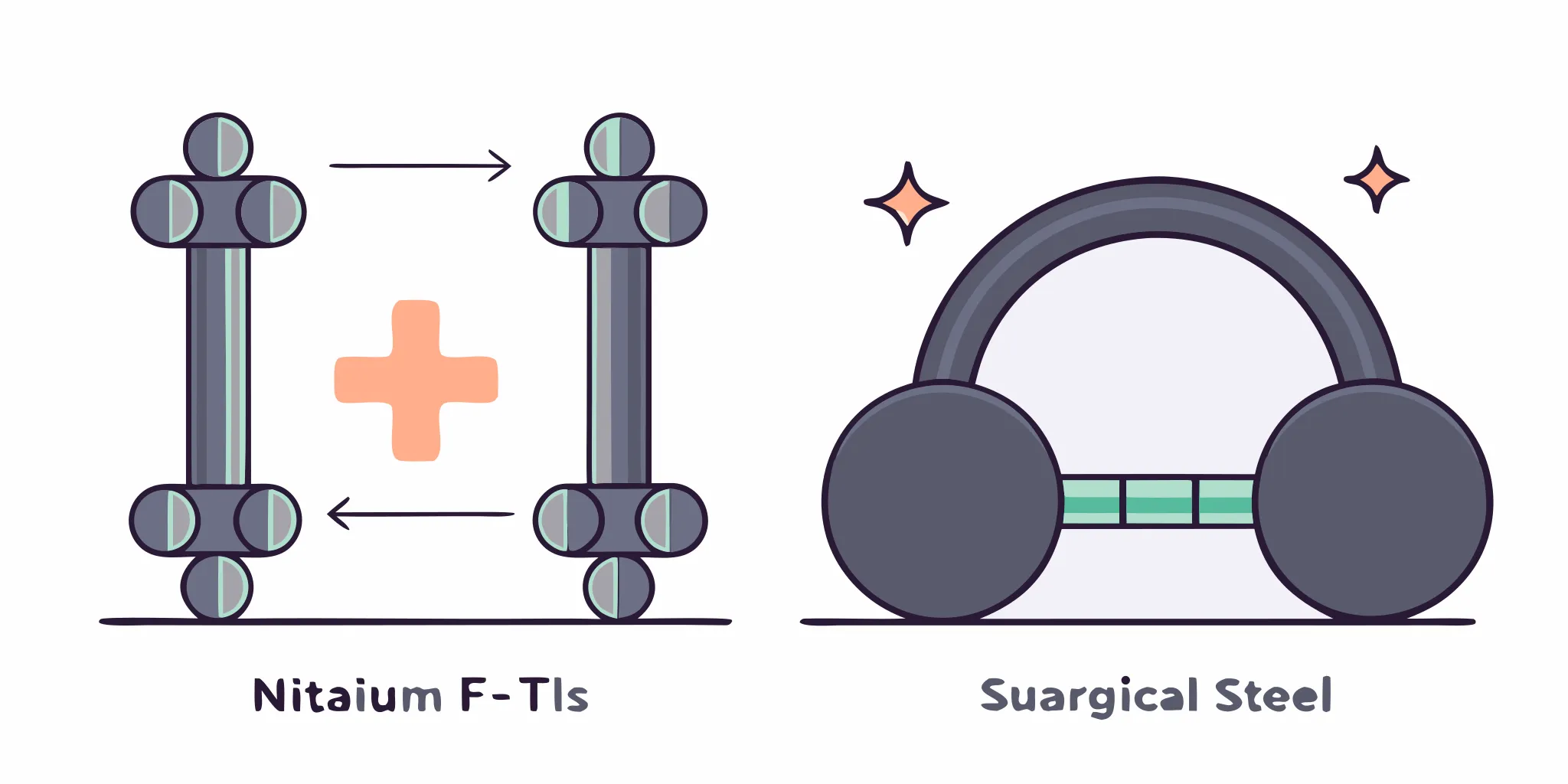
Implant-Grade Titanium vs Surgical Steel: Key Differences
When you get a new piercing, your body needs a safe metal to heal. Many shops use surgical steel, but it is a lower-grade option. We prefer to use implant-grade titanium because it is far safer for your skin. Choosing the right metal can mean the difference between a smooth heal and constant redness.
| Feature | Implant-Grade Titanium (ASTM F136) | Surgical Steel (316L) |
|---|---|---|
| Composition | Ti-6Al-4V ELI (pure titanium alloy) | Iron alloy with chromium and nickel |
| Nickel Content | 100 percent nickel-free | Up to 15 percent nickel |
| Weight | 45 percent lighter than steel | Heavy and dense |
| Rust Resistance | Highly resistant, will not rust or tarnish | Can corrode under moisture or body fluids |
| Biocompatibility | Excellent biocompatibility | Lower biocompatibility |
| Cost | Premium but safe price | Cheap but risky |
Nickel Content and Metal Allergies
Nickel is the main cause of contact dermatitis in healing piercings. Surgical steel contains up to 15 percent nickel, which can leak into your tissue. This often leads to red, itchy, and swollen skin. In contrast, ASTM F136 titanium is 100 percent nickel-free. This makes implant-grade titanium body jewelry the safest option for anyone with sensitive skin.
Weight and Rust Resistance
Weight plays a big role in how your piercing heals. Titanium is about 45 percent lighter than surgical steel. Heavy jewelry pulls down on fresh wounds, which can cause them to shift or reject. Also, titanium does not rust or tarnish. Unlike steel, it does not break down when it meets moisture or body fluids. This helps your skin heal without extra stress.
Medical Research and Tissue Wear
The safety of these metals is backed by real science. Surgeons use titanium for orthopedic implants because of its superb biocompatibility. It bonds well with human tissue and does not cause a toxic reaction. Studies also show that medical-grade titanium has a better metallic wear profile than stainless steel, shedding fewer metal ions over time. Because of this research, we choose titanium to keep your piercing safe.
Why ASTM F136 Titanium Is the Best Choice for New Piercings
When you get a new piercing, your body treats it as an open wound. The jewelry you choose must help, not hinder, the healing process. Choosing high-quality tragus piercing jewelry or other first studs needs a safe metal. At Z Edge Piercing, we use ASTM F136 titanium as our standard for all fresh piercings.
- Lighter weight: Titanium is about half the weight of steel, which cuts pull on raw tissue and helps jewelry stay in place
- Biocompatibility: Your body accepts titanium and will not release metallic ions into your skin
- Nickel-free safety: ASTM F136 titanium is fully nickel-free, which keeps your healing skin safe from painful flares
- Infection resistance: Research shows that titanium's surface traits help reduce biofilm formation during healing
Lighter Weight to Stop Jewelry Migration
New piercings are prone to swelling and stress. Heavy metals like steel pull down on the fresh wound. This constant drag can cause the jewelry to shift or migrate out of place. ASTM F136 titanium is about fifty percent lighter than surgical steel. This low weight cuts pull on raw tissue, which helps the jewelry stay in its correct spot.
Biocompatibility and Low Irritation
Your body accepts titanium because it is biocompatible. Unlike cheap metals, this metal does not release metallic ions into your skin. It will not react with body fluids. Choosing implant grade titanium body jewelry ensures your healing skin stays calm and quiet. It gives a smooth surface that helps the body heal, making your healing time much more pleasant.
Nickel-Free Safety for New Piercings
Many steel alloys contain nickel, which is a common cause of skin rash. A fresh piercing reacts fast to nickel exposure. This issue, called contact dermatitis, slows down healing and hurts. ASTM F136 titanium is fully nickel-free, which keeps your healing skin safe from bad flares. Avoiding nickel from day one is the best way to prevent painful issues. Book your appointment at Z Edge Piercing and get ASTM F136 titanium for every new piercing.
We do not take shortcuts with your health. Every studio at Z Edge Piercing uses ASTM F136 titanium as the base standard for new piercings. Whether you want a new nose stud or need safe nose piercing jewelry, we have you covered.
Why Titanium Is Better for Sensitive Skin and Metal Allergies
Metal allergies are a major concern for many people getting a new piercing. Research shows that nickel allergies affect about 10 percent to 15 percent of people worldwide. When a metal contains nickel, it can trigger contact dermatitis, causing red, itchy, and swollen skin. Since piercing jewelry sits right inside an open wound, the body reacts quickly to bad metals.
Understanding Metal Allergies
Most itchy skin from body jewelry comes from nickel in the metal. When a piercing is healing, the skin is easily irritated by metal ions. Implant-grade titanium (ASTM F136) is 100 percent nickel-free, making it the best choice for sensitive skin. This metal is highly biocompatible, which is why doctors use titanium in orthopedic implants. Because it does not release metal ions, it keeps your body from reacting and helps the piercing heal fast.
The Risks of Surgical Steel
Many shops sell surgical steel jewelry as a safe option, but steel is in fact a poor choice for sensitive skin. Most surgical steel alloys contain small amounts of nickel mixed into the metal. Over time, these alloys can leach nickel and other metallic ions into your tissue. Studies show that titanium releases fewer ions than steel, leading to better long-term tissue responses. To protect your skin, you should always buy real implant grade titanium body jewelry.
Safe Piercing Options for Kids
Children have highly sensitive skin, making them more likely to get metal allergies. If a child is exposed to nickel during their first piercing, they can develop a lifelong allergy to jewelry. At Z Edge, we put the health and safety of our youngest clients first. We use ASTM F136 titanium and nickel-free 14k gold to give a safe, clean, and easy healing process. Parents can learn more about our high safety standards on our kids ear piercing page.
How to Choose the Best Implant-Grade Titanium Body Jewelry
When shopping for new piercings, choosing the right metal is vital. You should always look for exact marks to find the safest pieces.
- Look for the ASTM F136 or Ti-6Al-4V ELI marking on the packaging
- Ask for a mill certificate from the manufacturer to verify purity
- Choose threadless or internally threaded designs that protect healing tissue
- Buy from a reputable studio that uses only certified materials
The ASTM F136 Standard
The gold standard for body jewelry is ASTM F136 titanium. This metal is certified safe by medical standards for surgical implants. Cheap surgical steel often contains nickel, making it an inferior choice that causes skin reactions.
Genuine implant-grade jewelry must meet this ASTM F136 standard. This standard ensures the metal is highly pure and safe for long-term wear. The same metal is used widely in orthopedic implants because it works well with living tissue. Avoid sellers who call their jewelry titanium without naming this exact grade.
Threadless vs Internally Threaded Jewelry
You should also look at how the jewelry parts fit together. High-quality pieces use either threadless or internally threaded designs. Threadless jewelry uses a secure pin that bends slightly to stay tight inside a hollow post. Internally threaded posts have a smooth outside with threads carved inside the shaft.
Both styles keep the rough threads from scraping your skin when you insert them. This protection is vital for a fresh piercing. Cheap steel jewelry often uses external threads, which can tear the healing tissue inside your piercing.
Premium Styles Available at Z Edge
At Z Edge, we focus on safe metals for every client. Our studios carry a wide range of styles made from ASTM F136 titanium and nickel-free 14k gold. These options are perfect for new piercings and upgrades alike.
If you want a classic look, we offer implant-grade titanium captive bead rings that are ideal for ears, noses, and lips. You can also find threadless labrets, clickers, hoops, and curved barbells in our store. Our team will help you find the perfect size and style for your needs. Shop our full collection of implant grade titanium body jewelry and find your perfect fit.
Frequently Asked Questions
Why is implant-grade titanium superior to surgical steel for piercings?
Implant-grade titanium has no nickel, which is a metal that often causes bad skin rashes. Surgical steel has nickel in it, and this nickel can leak into your skin. Peer-reviewed research on PubMed confirms that titanium is much safer for body tissues than stainless steel. It does not shed metal particles that hurt your body.
Does titanium body jewelry rust or tarnish?
No, genuine titanium body jewelry does not rust, corrode, or tarnish. It has a natural outer layer that protects the metal from sweat and body fluids. Cheap steel can break down over time, but titanium stays safe and shiny for years of wear.
Is implant-grade titanium safe for new piercings?
Yes, implant-grade titanium is the safest metal for a new piercing. Since it is safe for sensitive skin and very light, it does not weigh down your healing skin or cause red bumps. ASTM F136 titanium is certified safe for medical implants, which means your new piercing can heal fast without bad skin reactions.
How can I identify genuine implant-grade titanium jewelry?
You should check for the ASTM F136 mark on the jewelry or ask to see the mill certificate from the maker. Real titanium is light, cold to the touch, and can be anodized into bright colors. Buying from a trusted studio like Z Edge Piercing is the best way to avoid fake metals. Safe shops will always show you where their jewelry comes from.
Shop Implant-Grade Titanium Body Jewelry at Z Edge Piercing
Your piercing deserves the best materials from day one. All of our body jewelry is crafted from ASTM F136 implant-grade titanium or nickel-free 14k gold, the same materials trusted by surgeons and medical implant manufacturers. No mystery metals, no nickel alloys, no shortcuts.
Whether you need a titanium flat-back labret for a healing helix or a seamless clicker for your septum. We carry a full selection of styles designed for comfort and long-term wear. Every piece is lightweight, hypoallergenic, and built to last.
Browse our curated collection of implant-grade titanium body jewelry and find the perfect fit for your next piercing. Visit Z Edge Piercing today.
