Prince Albert Jewelry Guide: Planning, Fit, and Care
Choosing Prince Albert jewelry involves more than picking a ring that looks right. The piercing’s anatomy, current jewelry dimensions, material, and intended wear all affect what may work. This guide explains how to compare options and plan a replacement without guessing at fit.
Contact Z-Edge about jewelry and service
What makes Prince Albert jewelry different?
A Prince Albert piercing passes through the underside of the glans and exits through the urethral opening. Jewelry therefore sits in a sensitive area and may be affected by anatomy, movement, clothing, and urination. A design that suits another piercing—or another person—cannot be assumed to fit this one.
Common jewelry styles include circular barbells, captive bead rings, and curved barbells. The best shape depends on the piercing’s route and the wearer’s preferences. Consider the jewelry’s position, how it moves, and whether its ends are comfortable during ordinary activity. Product photos help compare appearance, but they do not establish fit.
Placement and dimensions matter as much as style. A piece needs to follow the existing channel appropriately; a visually similar design can behave differently if its ring diameter, bar length, gauge, or end profile differs. For broader information about professional body piercing, see Z-Edge’s body piercing services.
Which jewelry shapes should you compare?
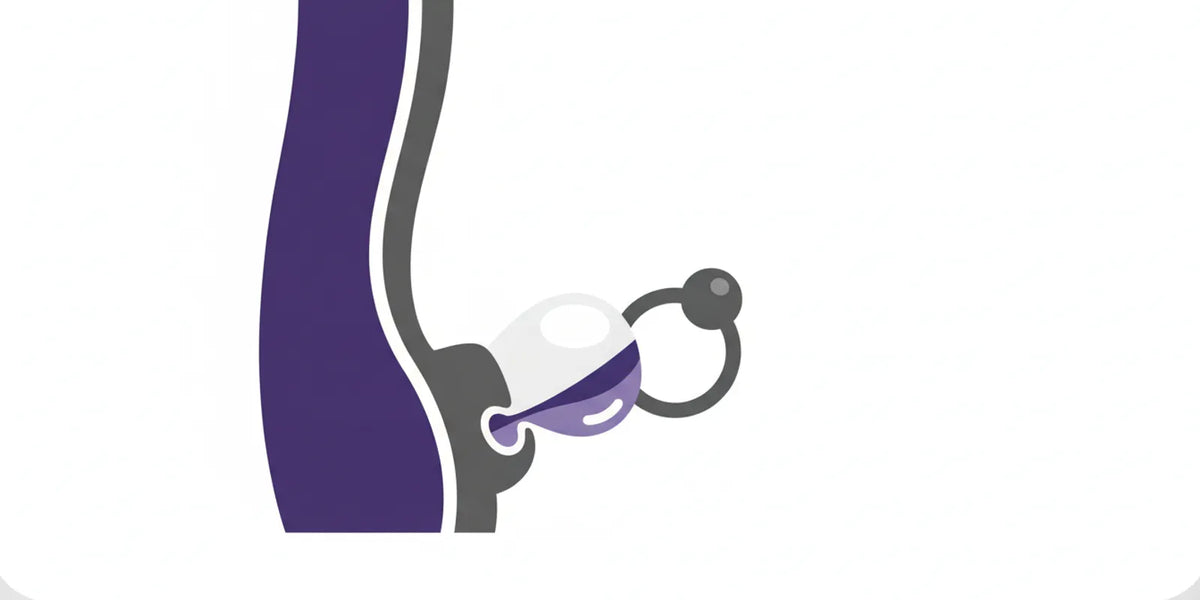
A circular barbell forms an open circle with a removable bead or end at each side. It offers a simple, balanced look, but its inner diameter must suit the piercing’s position and anatomy. A ring that is too small may press or pull. One that is too large may move more than intended or catch on clothing.
A captive bead ring holds a bead between the ends of a ring. It has a distinct closure and appearance. A curved barbell follows a curved path and leaves its ends visible. Each form has different proportions and movement. Check that a style is intended for the route rather than choosing solely from an attractive image.
Compare the shape, opening or closure, and end profile. Smooth, well-finished surfaces matter for comfort and cleaning. Decorative ends should not create sharp edges or unnecessary bulk. Browse circular bar jewelry to see ring-style examples, and review threadless jewelry options only when the product’s construction and placement suit your intended use. A category page is a starting point, not confirmation that every piece shown is right for this piercing.
It can help to think through a normal day rather than an idealized product photo. Consider whether the jewelry could press against clothing or be tugged during movement. The end profile, closure position, and amount of movement all influence how a piece feels in use. These are practical comparisons, not a way to diagnose an uncomfortable or healing piercing.
How do gauge and dimensions affect fit?
Gauge describes jewelry thickness. A lower gauge number generally indicates a thicker piece. Do not assume a thicker or thinner option will be suitable because a listing calls it common. A change in gauge can affect how jewelry sits and how the channel responds. Verify the established gauge before ordering; do not force jewelry that does not pass easily.
For ring-style jewelry, inner diameter measures the space across the inside of the ring. For a curved barbell, wearable length describes the usable portion between its ends. These measurements answer different questions, so do not compare a ring diameter directly with a bar length. Record the gauge as well as the relevant dimension, and confirm the listing’s measurement convention.
Write down the current piece’s gauge and dimension if known. If you do not know them, avoid estimating from a photograph or trying to measure jewelry while it is worn. A wrong dimension can contribute to pressure, excess movement, or discomfort. Use product specifications to compare like with like, and choose a piece offered in the intended size.
| Option or measurement | What it describes | What to check |
|---|---|---|
| Gauge | Jewelry thickness | Match the established gauge; do not force a different size. |
| Ring inner diameter | Space inside a ring | Compare the inner measurement, not outside width. |
| Wearable length | Usable length of a barbell | Confirm how the listing measures it. |
| Shape | Ring or curved-bar form | Consider route, position, movement, and end profile. |
| Material | The metal used for jewelry | Look for ASTM F136 implant-grade titanium or nickel-free 14K gold. |
As an example, suppose you currently wear a ring and find a listing with a similar-looking ring but only an outside diameter. That information does not tell you the inside space available. Do not infer the inner diameter by eye. Either locate a listing that clearly states the relevant dimension or hold off until you can establish the current measurement. The same principle applies when comparing a barbell listing that gives overall length rather than wearable length.
Measurements are not interchangeable labels. A product listing may call out gauge, diameter, length, or total dimensions; read the description carefully and note exactly which number refers to which part. If a critical measurement is absent, that is a reason not to guess, rather than an invitation to use another size as a substitute.
Which materials should you look for?
Z-Edge uses ASTM F136 implant-grade titanium and nickel-free 14K gold for piercing jewelry. These are the materials to prioritize when comparing options. Material claims should be specific: look for the stated grade or metal, rather than relying on broad labels such as “premium” or “hypoallergenic” without details.
Steel is an inferior option to the materials Z-Edge uses; do not treat it as an equivalent alternative. If a listing does not clearly identify its material, appearance alone cannot tell you what it is made from. Review the product details and compare only options whose material is stated.
Finish and construction matter too. Look for smooth surfaces, secure closures, and dimensions that match the established piercing. Explore jewelry in the male genitals category for relevant product choices, then confirm material, gauge, shape, and sizing on each individual listing. Jewelry shown in a broad category is not necessarily intended for every placement in that category.
When evaluating a material description, distinguish the base material from surface color or finish. A gold-colored appearance does not by itself identify the underlying metal. Likewise, a general phrase about quality is not a substitute for a stated material grade. Z-Edge’s material choices are ASTM F136 implant-grade titanium and nickel-free 14K gold; use those concrete descriptions as your comparison points.
How can you plan a jewelry replacement?
Start by identifying the piece you currently wear, if known: its shape, gauge, and inner diameter or wearable length. Write each item separately so a measurement for one style does not get confused with another. Note changes in fit, such as persistent pressure, excessive movement, or catching. These observations can help you avoid buying another piece based only on appearance.
Next, narrow your choices by material and shape. If you want a ring, compare inner diameters; if you are considering a curved barbell, focus on wearable length and end size. Read the complete product description, check the material statement, and confirm that the item is presented for an appropriate placement. Use other piercing jewelry categories only as examples of how different forms are organized, not as proof that an item suits this piercing.
Then compare the shortlisted options on the same terms. A simple note might read: “current ring; gauge known; inner diameter unknown; titanium stated; closure style preferred.” That makes the unanswered question visible. It is safer and more useful than silently substituting a measurement from a different product or assuming that a similar-looking piece will behave the same way.
Do not use jewelry as a tool to stretch the channel or force a change. If the current jewelry cannot be removed easily, or replacement causes pain or bleeding, stop rather than pushing through resistance. A change in fit or persistent irritation is a reason to pause the replacement plan and get appropriate help. The goal is a piece that suits the established piercing, not a test of how much pressure it can tolerate.
Finally, check the product and the plan before making a change. Confirm that the closure is intact, that the dimensions are the ones you intended to order, and that the piece is not being chosen as a substitute for care of an irritated or healing area. For service questions, the contact page is the direct way to reach Z-Edge.
What care considerations matter for daily wear?
Keep hands clean before handling jewelry, and follow the care instructions provided for the piercing and jewelry. Avoid twisting, pulling, or repeatedly changing a piece just to check it. Friction from snug clothing and rough fabrics can catch jewelry, so consider how the selected shape and ends interact with everyday wear.
Clean jewelry according to its material and product guidance. Avoid harsh products or improvised cleaning mixtures that may damage a finish or irritate tissue. Store spare pieces in a clean, protected place so they do not collect debris or become scratched by other items. Before wearing a replacement, check that it is intact and its closure functions correctly.
Good handling habits are simple and consistent. Wash your hands before contact, keep the jewelry on a clean surface when it is not being worn, and avoid sharing jewelry. Do not leave a spare piece loose in a pocket or a container where its finish may be scratched. If a closure seems loose or damaged, do not rely on it for wear.
Routine jewelry care is not treatment for a health concern. Increasing swelling, worsening pain, unusual discharge, or other concerning changes should not be managed by repeatedly changing jewelry. Seek appropriate medical care for significant or worsening symptoms. The U.S. Centers for Disease Control and Prevention provides general health information at CDC.gov; this broad resource is not a diagnosis or piercing-specific treatment plan.
How can you compare listings without overlooking details?
Listings can use different terms and photographs. Compare facts in a consistent order: material, gauge, shape, dimension, closure, and intended placement. Do not infer dimensions from an image, and do not assume two listings with similar names have identical measurements.
- Material: Is it identified as ASTM F136 implant-grade titanium or nickel-free 14K gold?
- Gauge: Is the thickness stated clearly?
- Dimension: Is the measurement an inner diameter or wearable length?
- Shape and closure: Does the item match the form you intend to wear?
- Use: Does the description identify an appropriate placement?
If one of these details is missing, do not fill the gap with a guess. Choose a listing with clear specifications. For example, a ring photo may look close to your current piece, but even a different inner diameter can change movement and pressure. Product descriptions and measurements are more useful than visual similarity alone.
Be alert to mismatched terminology. A listing might show a ring but describe a barbell measurement, or give total length rather than wearable length. If the terminology does not clearly tell you what is measured, treat the dimension as unknown. Compare one type of measurement with the same type on another listing, and do not convert a visual impression into a precise size.
Also check whether the product is sold as a complete piece or as a component. Some jewelry systems use removable ends or separate parts, and the base and closure need to be compatible. Confirm what the listing includes before assuming that the pictured configuration is what will arrive. These checks help prevent a mismatch between the piece you intended to buy and the actual item.
What should you avoid when choosing Prince Albert jewelry?
Avoid choosing by gauge number alone, assuming all ring styles fit similarly, or selecting a size because it appears popular. Avoid jewelry with unclear material claims or a closure that looks damaged. Do not try to correct an uncomfortable fit by repeatedly bending, stretching, or forcing jewelry into place.
Do not make an unscheduled change if the piercing is newly made or still healing. Follow the care plan rather than treating a change of style as routine. Healing varies, and unnecessary manipulation can irritate tissue. For an established piercing, plan around its current dimensions and the replacement’s stated specifications rather than making an abrupt switch to a substantially different shape or size.
Do not treat a purchase as a solution to pain, swelling, or another concerning symptom. Choosing a different shape for aesthetic reasons is a separate decision from addressing a health issue. If symptoms are significant or getting worse, stop experimenting with jewelry and seek appropriate medical care.
Finally, separate appearance from fit. A decorative end or unusual ring shape may look appealing, but it still needs to suit the route and daily routine. A useful comparison asks both “Do I like how it looks?” and “Do I know its material and dimensions?” If the second answer is no, pause the purchase until you have reliable product details.
How do you make a practical choice?
Use a short decision sequence. First, confirm that the piercing is established and that a replacement is appropriate for your care plan. Second, identify the current jewelry’s shape, gauge, and relevant dimension. Third, narrow choices to stated materials and options intended for the placement. Fourth, compare measurements and closure details, not just images. Finally, stop if the item does not fit easily or symptoms are concerning.
This sequence also makes it easier to compare two plausible options. Imagine one ring has the preferred look but no clearly stated inner diameter, while another has a less ornate end and complete specifications. The second offers more information for a responsible comparison. You can keep the aesthetic preference in mind while waiting for the missing measurement, rather than making an uncertain choice immediately.
Another useful check is to read the listing from top to bottom before placing an order. Confirm material, style, dimensions, closure, and what components are included. Save the specifications with your notes about the existing jewelry. This record can make a future replacement easier because you will have a concrete reference rather than relying on memory.
For another comparison of jewelry forms, browse additional body jewelry styles, while keeping in mind that each placement has its own requirements. Returning to the exact measurements and material statement helps keep the decision focused on what is known.
Contact Z-Edge with your jewelry questions
Frequently Asked Questions
What type of jewelry is commonly used for a Prince Albert piercing?
Common forms include circular barbells, captive bead rings, and curved barbells. The appropriate option depends on the piercing route, anatomy, intended wear, and correctly matched dimensions.
How do I know what size to buy?
Confirm the current jewelry’s gauge and relevant dimension, such as a ring’s inner diameter or a barbell’s wearable length. Do not estimate from a photograph or force a piece that does not fit comfortably.
Which materials does Z-Edge use?
Z-Edge uses ASTM F136 implant-grade titanium and nickel-free 14K gold. Steel is an inferior option and should not be treated as comparable.
Can I change the jewelry while the piercing is healing?
Do not make an unscheduled change during healing. Follow the piercing’s care plan and avoid premature changes, since manipulation may irritate tissue.
What should I do if jewelry becomes painful or difficult to remove?
Stop rather than forcing or repeatedly manipulating it. For significant or worsening symptoms, seek appropriate medical care; do not rely on a jewelry change as treatment.
Careful comparison of shape, material, and measurements makes it easier to choose Prince Albert jewelry without relying on guesswork. Check the specifications before purchasing and prioritize a comfortable, properly matched fit.