

Choosing among the many types of ear piercings is easier when you understand where each placement sits, how it works with your anatomy, and what jewelry it can comfortably support. A classic lobe piercing offers a versatile starting point. Helix, conch, tragus, flat, rook, daith, snug, and industrial piercings create distinct looks in different areas of ear cartilage.
Explore Z Edge piercing services and plan your in-person consultation.
The best choice is not simply the placement that looks appealing in a photo. Your ear shape, daily habits, existing piercings, and jewelry goals all matter. A professional piercer can assess the available tissue, discuss a sensible placement, and select starter jewelry with an appropriate fit. Use this guide to build a shortlist, then make your final plan with a professional who can see your ear in person.
Types of ear piercings at a glance
Ear piercings are usually grouped into lobe placements and cartilage placements. Lobe tissue is soft and flexible, while cartilage creates the defined ridges and bowls across the upper and inner ear. Every ear is different, so a placement that works well on one person may need to be shifted or replaced with another idea on someone else.
- Lobe and upper lobe: versatile placements in soft tissue.
- Helix, forward helix, and flat: options across upper outer cartilage.
- Conch and tragus: distinctive central and inner-ear focal points.
- Daith, rook, and snug: anatomy-dependent placements through inner folds.
- Industrial: two aligned upper-cartilage piercings connected by one bar.
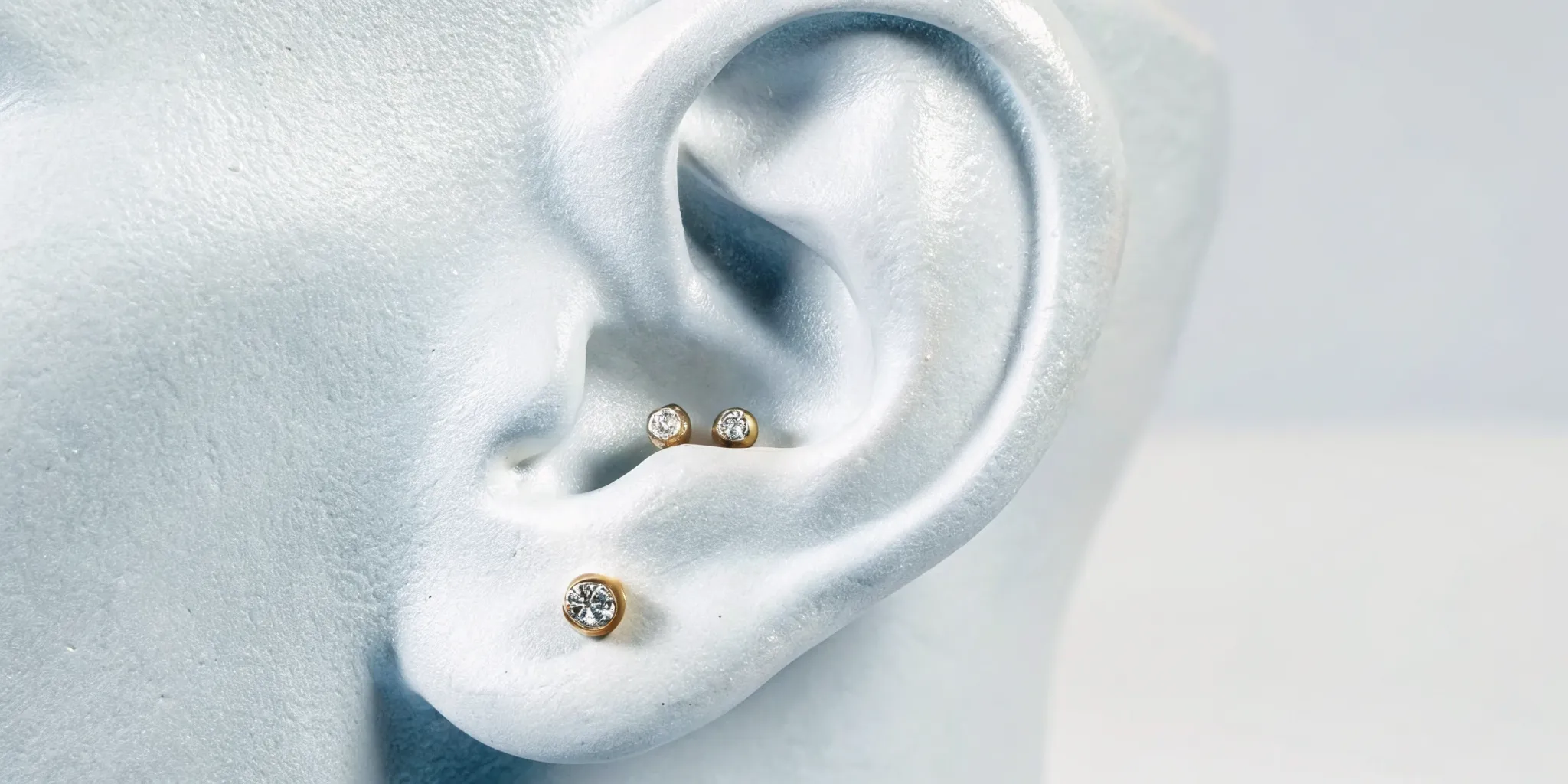
Lobe and upper-lobe piercings
The standard lobe piercing sits in the soft lower portion of the ear. It can hold many jewelry styles after it is fully healed, making it a flexible foundation for a curated ear. Browse Z Edge's earlobe jewelry collection for inspiration. Second, third, and upper-lobe piercings extend the design upward. Their spacing can follow a straight line, gentle curve, or deliberately staggered pattern.
Lobe placements are often selected for a first piercing because they suit many ears and styles. If you are planning a child's first ear piercing, review Z Edge's kids ear piercing information before scheduling.
Helix and forward-helix piercings
A helix piercing sits along the outer rim of the upper ear. See the helix jewelry collection for placement-friendly styles. Depending on the available space, one helix can create a clean accent, while two or three can form a deliberate row. A forward helix sits closer to the face on the front section of the upper rim. Both rely on suitable cartilage shape and enough room for properly fitted jewelry.
Flat piercing
A flat piercing is placed on the broad upper cartilage inside the ear's outer rim. This open-looking area can showcase a decorative end, cluster, or small statement piece. Exact placement matters because the upper ear has curves that can affect how jewelry sits. For a deeper look at this option, read the flat piercing guide.
Conch piercing
The conch sits in the central bowl of the ear. Explore conch jewelry to see how this placement can become a focal point. An inner conch placement can highlight a gem or decorative stud in the middle of a curated design. Some people eventually wear a ring that visually wraps around the ear, but anatomy, healing status, and fit determine whether that style is appropriate. Starter jewelry should be selected for stability rather than chosen only for its final appearance.
Tragus piercing
The tragus is the small projection of cartilage near the entrance to the ear canal. Browse tragus jewelry for examples of its subtle scale. It creates a subtle focal point that can complement lobe and conch jewelry. Because tragus size and shape vary, a professional should confirm that there is enough suitable tissue. Earbuds and other in-ear devices may also affect whether this placement fits your routine.
Daith, rook, and snug piercings
These placements use distinctive inner cartilage folds. A daith passes through an inner fold above the ear canal. A rook sits through the upper inner ridge, while a snug crosses a pronounced ridge in the middle outer portion of the ear. They can add depth to a curated ear, but each requires specific anatomy. No piercing should be chosen based on unsupported health claims.
Industrial piercing
An industrial typically connects two upper-cartilage piercings with one straight bar. Alignment is essential, and not every ear has the shape needed to support it without pressure. A professional must evaluate both entry points and the space between them. If an industrial is not a good anatomical match, two separate upper-ear piercings may create a related visual effect.
How do lobe and cartilage piercings differ?
The primary difference is the tissue involved. A lobe piercing passes through soft tissue, while placements such as helix, conch, tragus, and rook pass through cartilage. This distinction influences the piercing plan, starter jewelry, aftercare experience, and how carefully the area must be protected from pressure.
| Planning factor | Lobe placements | Cartilage placements |
|---|---|---|
| Anatomy | Often offers flexible spacing in soft tissue | Depends strongly on ridges, folds, and available cartilage |
| Daily pressure | Can still be irritated by sleeping or snagging | Often affected by headphones, helmets, glasses, or side sleeping |
| Starter style | Usually selected for stability and suitable room | Must closely match the placement and anatomy |
| Planning approach | Can form the foundation of a stack | Benefits from careful long-term layout planning |
Cartilage piercings generally deserve extra patience because bumps, pressure, and repeated movement can create setbacks. Avoid comparing your progress with another person's timeline. Your piercer can explain what is normal for your specific placement and when a follow-up or jewelry adjustment is appropriate.
Neither category is automatically the better choice. A beautifully spaced lobe stack can look as intentional as a complex cartilage arrangement. Choose the option that fits your ear, routine, and willingness to protect the placement while it settles.
Which ear piercing fits your anatomy and lifestyle?
The right piercing should work with your body and your ordinary week. Start by considering the features of your ear, then think honestly about the objects and habits that create pressure. A professional anatomy assessment connects those factors with a safe, attractive placement plan.
Let anatomy guide the placement
Photos are useful inspiration, not templates. The size of a tragus, depth of a conch, shape of an upper rim, and definition of inner folds vary from person to person. A piercer may recommend moving a desired placement slightly so jewelry sits more naturally. They may also suggest a different piercing that creates a similar balance on your particular ear.
Account for sleep and equipment
If you always sleep on one side, piercing that ear can make it difficult to avoid pressure. Over-ear headphones, earbuds, helmets, hats, glasses, and work headsets may touch certain placements. Bring these details into your consultation. Planning around them can reduce friction and help you choose which ear to pierce first.
Build around your personal style
Some people want one subtle accent. Others prefer a layered ear with varied shapes and sparkle. Consider whether you want symmetry between both ears or a different composition on each side. A simple design can use repeating metals and shapes. A more expressive design can balance one focal piece with smaller supporting jewelry.
Plan enough open space around every piercing. Crowding can make a layout look busy and can limit future jewelry choices. A thoughtful map gives each piece room to be seen while reserving useful spaces for later additions.
What jewelry is best for a new ear piercing?
Starter jewelry should prioritize material quality, fit, stability, and compatibility with the selected placement. The piece that looks best after healing is not always the best piece for the initial stage. A professional can choose an appropriate post length or ring diameter and explain when a change may be considered.
Start with high-quality materials
Z Edge emphasizes ASTM F136 implant-grade titanium and nickel-free 14k gold. You can also browse 14k yellow gold jewelry while planning your finished look. These premium materials support a high-quality jewelry plan without sacrificing style. Titanium can provide a lightweight, versatile foundation. Nickel-free 14k gold offers a refined option for clients who want warmth and lasting visual appeal.
Material descriptions should be specific. Ask what the jewelry is made from rather than relying on a vague color or finish label. Quality jewelry also needs smooth surfaces, secure components, and a design suited to its placement.
Choose a shape that supports the placement
Flat-back labret-style jewelry can create a comfortable, streamlined option for many ear placements, while other areas may call for a curved or straight barbell. Rings can move more and may not be recommended as starter jewelry for every placement. Follow the piercer's recommendation rather than forcing a particular shape into a piercing that does not suit it.
Plan for a professional follow-up
Fresh piercings may begin with extra room to accommodate normal early changes. After the area settles, a professional may recommend downsizing to a better-fitting post. Jewelry that remains too long can snag and shift. Jewelry that is too tight can create pressure. Do not guess at the fit or change a fresh piercing on your own.
How to plan a curated ear
A curated ear looks cohesive because each placement has a role. Instead of collecting unrelated piercings, build a design that considers focal points, spacing, scale, and future options. You do not need to complete the entire plan at once.
- Choose a focal point. Decide whether a conch, flat, helix cluster, or lobe stack will lead the design. The focal piece can be visually larger or more detailed than its supporting jewelry.
- Map your anatomy. Ask a professional to identify which folds and open areas can support piercings. Marking possible placements can reveal a better composition than copying an inspiration photo.
- Balance size and spacing. Pair a statement piece with smaller accents, and leave enough negative space for the design to breathe. Consider how jewelry will look from the front and side.
- Use a cohesive material story. Repeating ASTM F136 implant-grade titanium or nickel-free 14k gold creates unity. You can repeat gem colors, shapes, or motifs without making every piece identical.
- Build gradually. Complete the design in manageable stages. This lets you protect new placements, observe how the composition develops, and adjust the plan with your piercer.
A gradual approach also gives you time to decide what you genuinely enjoy wearing. Save inspiration photos, but focus on the pattern behind them: perhaps you like curved lines, tiny gold accents, or one bold central piece. Those preferences are more useful than trying to reproduce another ear exactly.
When should you consult a professional piercer?
Consult a professional before committing to a placement, when choosing starter jewelry, and whenever a healing piercing no longer seems to fit or behave as expected. An in-person assessment is especially important for anatomy-dependent placements such as industrial, snug, rook, daith, and forward helix piercings.
Return for guidance if jewelry feels too tight, catches repeatedly, changes angle, or seems to be creating ongoing pressure. Do not remove or replace fresh jewelry based only on online advice. A professional can inspect the placement and determine an appropriate next step.
Seek medical care for suspected infection, spreading redness, severe pain, fever, or other urgent symptoms. A piercer can help with jewelry and placement questions, but medical concerns need a qualified healthcare professional.
Parents and guardians should review service requirements before planning a minor's appointment. Z Edge provides information about piercings for minors and a dedicated guide to kids ear piercing.
Frequently asked questions about types of ear piercings
What is the best first ear piercing?
A standard lobe piercing is a versatile first option for many people, but the best choice depends on anatomy, lifestyle, and personal goals. A professional can assess your ear and explain suitable starter jewelry before the appointment.
Can everyone get any type of ear piercing?
No. Cartilage folds, rim shape, tissue depth, and available space differ between ears. Industrial, snug, rook, daith, forward helix, and other anatomy-dependent placements may not suit every person. A professional assessment is the only reliable way to confirm suitability.
Can I get several ear piercings at once?
That decision should be made with a professional who understands your health history, current piercings, lifestyle, and ability to protect the new placements. A gradual plan can make it easier to avoid pressure and care for each piercing.
Should I start an ear piercing with a ring or stud?
The best starter shape depends on the placement and anatomy. Many placements benefit from stable, properly fitted post-style jewelry, while some may use another shape. Rings are not appropriate starter jewelry for every piercing. Follow the recommendation made during your in-person consultation.
How do I choose between a helix, conch, and tragus?
Choose based on anatomy, desired visibility, jewelry goals, and daily pressure from sleeping or equipment. A helix accents the outer rim, a conch creates a central focal point, and a tragus offers a subtle inner-ear detail. A piercer can help identify the strongest option for your ear.
Plan an ear piercing that fits you
The best ear piercing plan combines inspiration with a realistic anatomy assessment, high-quality jewelry, and room to evolve. Whether you want one classic lobe piercing or a complete curated ear, Z Edge can help you consider placement and jewelry options that fit your goals.
Review piercing services and pricing, or call Z Edge at 941-378-0914 to plan an ear piercing consultation and take the next step with confidence.
