Orbital Piercing Guide: Placement, Jewelry and Healing
Orbital Piercing Guide: Placement, Jewelry and Healing
An orbital piercing is an eye-catching ear piercing where one circular ring connects two separate piercing channels. The ring creates a continuous path around the tissue, so the final look depends on more than the jewelry alone. Spacing, ear anatomy, ring diameter, material, and healing care all need to work together.
Contact Z Edge Piercing to plan your orbital piercing with a jewelry and placement consultation.
This guide explains what makes an orbital different from a standard double piercing, how the configuration relates to a conch or helix placement, what to consider before choosing a ring, and how to care for the two connected channels while they heal. It is written for anyone exploring an orbital ear piercing, whether you are considering a lobe configuration or a cartilage placement.
What Is an Orbital Piercing?
An orbital piercing is a two-channel ear piercing connected by one piece of circular jewelry. The two openings may sit in soft lobe tissue or cartilage, depending on the placement and the shape of the ear. The defining feature is the connected ring. Two nearby studs are still two separate piercings, not an orbital, until one ring is fitted to travel through both channels.
The ring creates the orbit
The word orbital describes the way the jewelry moves around the tissue between the channels. Rather than placing one stud in each hole, the wearer sees one continuous curve. That curve makes small differences in angle, spacing, and height more noticeable than they would be with independent studs.
Because the ring links the channels, the configuration has to be planned as one design. The first question is not simply which ring looks good in a product photo. It is whether the ring's path matches the natural contours of the ear without pulling the openings in different directions.
Orbital is a configuration, not one fixed ear location
Orbital piercings are often shown in cartilage, but the word does not identify only one spot. An orbital can be planned in the lobe, along an outer cartilage edge, or in another area with enough tissue and a suitable path for the ring. The location changes the sensation, healing expectations, and jewelry fit.
That flexibility is part of the appeal. It also means a saved image is a style reference, not a placement template. Your ear may need a different distance, angle, or ring size to create a balanced result.
Orbital vs. Conch Piercing: What Is the Difference?
A conch piercing describes an anatomical area, while an orbital describes how two piercing channels are connected. The conch is the large, cup-shaped area inside the ear. A standard conch piercing uses one channel and may be styled with a stud or a hoop. An orbital uses two channels and one ring, wherever the configuration is anatomically appropriate.
Conch is a location
When people say they want a conch piercing, they are usually naming the part of the ear they want pierced. A conch piercing guide can help you understand that single placement, its jewelry options, and its healing considerations. A separate conch jewelry guide is useful when the question is whether a stud or hoop suits that one channel.
Orbital is a connected jewelry layout
An orbital conch is possible when two channels are placed in the conch area and a single ring can pass through both without creating unwanted pressure. That is different from a single conch channel wearing a hoop. The names can overlap in conversation, but the structure does not. One describes where the piercing sits. The other describes the relationship between two channels and one ring.
The distinction matters when you plan jewelry. A ring that works for one conch channel is not automatically correct for an orbital. The ring must account for both openings and the tissue path between them.
Where Can an Orbital Piercing Be Placed?
Orbital piercing placement depends on the available tissue, the ear's folds, the spacing between the intended channels, and the path the ring needs to follow. A broad ear piercing chart can help you learn names and locations, but orbital planning has an extra layer: two points must work together as one design.
Lobe orbital placement
The lobe contains no cartilage and is a common place to explore a connected-ring look. It can offer more flexibility than a cartilage configuration, but the ring still needs to sit naturally. If the holes are too close, too far apart, or angled differently, the ring may press against one channel instead of resting evenly.
A lobe orbital can also be part of a larger ear project. Think about how it will relate to existing studs, stacked lobes, or future jewelry. The goal is not to force a standard distance. It is to create a layout that leaves room for the ring and still looks intentional when the ear is viewed from the front and side.
Helix and other cartilage placement
The helix is the curved outer edge of the ear, while the conch sits farther inside the ear. Both are cartilage areas with different contours. A helix orbital may follow the rim, while an inner-ear orbital may need a different curve and a more compact visual balance.
Cartilage placement requires patience because cartilage piercings generally heal more slowly than lobe piercings. It also makes sleeping position, headphones, hair, helmets, and other sources of pressure worth considering before you commit. A strong layout is one you can live with during the full healing period, not only one that photographs well on day one.
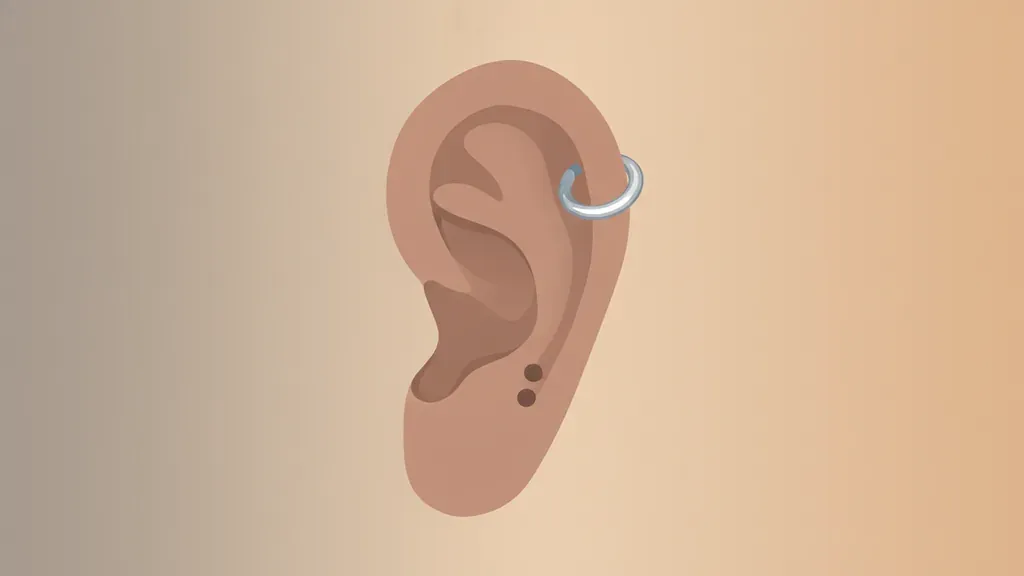
At a Z Edge studio, the placement conversation should account for the ear in front of you. The same orbital design can look different on different ears because cartilage folds, lobe shape, and available space are not identical.
How Does Ring Sizing and Fit Work?
Orbital ring fit begins with the relationship between the two channels. The inner diameter needs to follow the distance and angle between the openings without pressing one side forward or leaving excessive movement. Gauge, ring profile, closure style, and the amount of space around the tissue all affect the final fit.
Spacing determines the ring path
A ring that is too small can pull on the channels and create pressure. One that is too large can move more than intended and catch on hair, clothing, or bedding. The correct fit is not the same as choosing the smallest ring that closes. It is the ring that sits smoothly through both openings while leaving appropriate room for normal tissue changes during healing.
Do not measure an orbital from a screen or assume that a ring diameter listed for one ear will work for another. The distance between the channels is part of the design, so fit should be assessed with the actual anatomy and the intended jewelry path in mind.
Closure and surface finish matter
Orbitals may use different ring constructions, including designs with a separate closure or a continuous-looking finish. The important checks are that the closure does not sit where it creates pressure, the surface is smooth, and the ring does not have rough edges that can catch on the healing channels. Public Health Ontario recommends smooth piercing jewelry free of nicks, burrs, and scratches.
Fit can change as swelling settles. That is why an orbital should not be treated as a one-time jewelry purchase with no follow-up plan. Your Z Edge team can recommend when a change is appropriate and which ring profile supports the intended look without turning the healing period into a constant adjustment.
Which Jewelry Materials Are Best for an Orbital Piercing?
Material quality matters in every fresh piercing, and an orbital has two channels that need a compatible piece of jewelry. Public Health Ontario recommends biocompatible materials for jewelry inserted during body piercing. Z Edge focuses on ASTM F136 implant-grade titanium and nickel-free 14k gold for clients choosing jewelry for a new or healed piercing.
ASTM F136 implant-grade titanium
ASTM F136 implant-grade titanium is a practical choice for an orbital because it is the material Z Edge uses for implant-grade, nickel-free jewelry. Explore the ASTM F136 implant-grade titanium collection when you want to see the available material direction. The collection includes ring and labret styles across multiple piercing categories, so you can discuss a finish and design that fit the placement rather than settling for an unverified metal.
For a healing orbital, the priority is a smooth, well-finished piece with a fit that respects both channels. Material and geometry work together. A high-quality metal cannot compensate for a ring that is too tight, while a well-sized ring is still a poor choice if its surface or composition is not suitable for the piercing.
Nickel-free 14k gold
Nickel-free 14k gold offers a warm, refined option for clients who want a more decorative finish. Z Edge's labret collection includes 14k gold and titanium options, allowing the jewelry conversation to include color and style without treating material safety as an afterthought.
Gold selection should still be specific. Ask what the piece is made from and how it is finished. Z Edge's guidance centers on nickel-free 14k gold, not an unspecified gold-colored coating.
Why steel should not be treated as an equal alternative
Steel is not comparable to ASTM F136 implant-grade titanium or nickel-free 14k gold for Z Edge's jewelry positioning. Nickel exposure is a known concern with some jewelry, and Mayo Clinic notes that nickel jewelry can trigger allergic reactions. Z Edge therefore emphasizes its implant-grade titanium and nickel-free 14k gold options instead of presenting steel as an equal healing choice.
How Long Does an Orbital Piercing Take to Heal?
Healing time depends on whether the orbital uses lobe tissue or cartilage, how the jewelry fits, and how consistently the area is protected from pressure and catching. Do not use one universal timeline for every orbital. Cleveland Clinic's ear-piercing guide explains that cartilage piercings take longer than lobe piercings and may take up to six months or a year to fully heal.
What to expect from cartilage healing
Cartilage has less blood supply than soft tissue, which is one reason it repairs more slowly. A cartilage orbital can look calm on the outside while deeper tissue is still sensitive. Cleveland Clinic also notes that a healing ear piercing may remain tender to touch until it is fully healed.
Because one ring connects two channels, pressure at one point can affect the way the jewelry rests at the other point. That does not create a separate medical timeline, but it does make fit and daily habits especially important. Avoid treating the absence of visible swelling as permission to rotate, change, or load the jewelry early.
Healing is not a race
Normal healing can include periods when the area feels more sensitive after friction or pressure. The useful response is to remove the source of irritation, follow the aftercare instructions from your Z Edge team, and allow the tissue time to settle. Do not use a ring change as the first response to every bump or tender day.
How Do You Care for a Healing Orbital?
Orbital aftercare should protect both channels and reduce unnecessary movement. Start with the instructions supplied by your Z Edge team and use the Z Edge aftercare guidance as your reference. The business stocks and recommends H2Ocean aftercare products, and its team provides detailed instructions and post-procedure support.
Keep cleaning gentle and consistent
- Wash your hands before touching the area or the jewelry.
- Use the recommended sterile saline aftercare product as directed.
- Let the solution reach both channels without twisting the ring.
- Allow the area to dry without rubbing it with a rough towel.
- Follow the complete written instructions instead of adding harsh household products.
There is no benefit to spinning the ring to move solution through the channels. Rotation can add friction and makes it easier for the ring to catch on tissue. A connected ring should rest in its intended path while you clean around it.
Reduce pressure, catching, and transfer of movement
Plan for the everyday activities that can disturb an orbital. Sleeping directly on the ear, wearing tight headphones, pulling hair through the ring, and catching it on clothing can all add pressure. Mayo Clinic warns that piercing jewelry can catch and tear tissue.
Protect the orbital by choosing a sleep position that does not compress it, keeping hair and accessories controlled, and handling the jewelry as little as possible. If the ring is repeatedly catching, contact Z Edge through its contact page so the fit can be reviewed as an actionable jewelry issue rather than repeatedly pushing the ring back into place.
Know when irritation needs medical attention
Some tenderness can occur during healing, but worsening redness, increasing pain, marked swelling, pus-like drainage, or feeling unwell can signal a complication. Mayo Clinic's piercing guidance lists redness, pain, swelling, and pus-like fluid among infection concerns, while NCBI's clinical reference describes outer-ear cartilage inflammation as a condition related to trauma and infection. Seek prompt medical care if symptoms are severe, worsening, or accompanied by fever. Do not remove jewelry or self-treat a suspected infection without appropriate medical guidance.
How Should You Plan an Orbital Piercing Appointment?
Bring the look you want, but let the final layout be built around your actual ear. A Z Edge studio can discuss whether the intended site has enough room for two channels, how the ring should travel, and which jewelry materials fit your goals. Mayo Clinic also recommends choosing a properly trained piercing studio and not attempting a piercing yourself.
Questions to settle before the appointment
- Do you want a lobe, helix, conch, or another orbital location?
- Are both channels new, or are you planning around existing piercings?
- Do you prefer ASTM F136 implant-grade titanium or nickel-free 14k gold?
- Will your daily sleep, work, headphones, or sport habits put pressure on the ear?
- Do you want a subtle ring or a more visible statement piece after healing?
Ask for a complete, itemized plan
Z Edge separates piercing service fees from jewelry costs, so the final conversation can account for the service and the exact piece selected. The company offers more than 40 piercing types across three Florida locations, but an orbital still needs a placement-specific discussion rather than a generic menu choice.
Use a current photo as inspiration, then ask the team to translate the idea to your anatomy. A balanced orbital may need a different ring diameter or channel position than the reference image. That is not a compromise. It is how the design becomes wearable on your ear.
Frequently Asked Questions About Orbital Piercings
What is an orbital piercing?
An orbital piercing is two separate ear piercing channels connected by one circular piece of jewelry. The placement can use lobe or cartilage tissue, but the connected ring is what defines the configuration.
Are conch and orbital piercings the same?
No. A conch is a location in the inner ear. An orbital is a two-channel jewelry configuration. A conch orbital can use two channels in the conch area, but a single conch channel wearing a hoop is not automatically an orbital.
Are orbital piercings painful?
Discomfort varies with the location, method, and individual pain tolerance. Cleveland Clinic describes ear piercing as a quick pinch followed by possible throbbing, with cartilage often feeling more intense than a lobe placement.
How long does an orbital piercing take to heal?
There is no single timeline. Lobe and cartilage orbitals heal at different rates, and Cleveland Clinic says cartilage piercings may take up to six months or a year to fully heal. Use the tissue and jewelry plan, not a calendar promise, to decide when the piercing is ready for a change.
What jewelry is used for an orbital piercing?
One circular ring connects the two channels. Z Edge emphasizes ASTM F136 implant-grade titanium and nickel-free 14k gold, with the ring's diameter, gauge, finish, and closure selected for the placement and anatomy.
How much does an orbital piercing cost?
The total depends on the service plan, whether the channels are new, and the jewelry selected. Z Edge separates service fees from jewelry costs. Contact the studio for current pricing instead of relying on a generic online estimate.
Can I get an orbital piercing with a piercing gun?
Z Edge's piercing guidance is needle-only, not a piercing gun. A connected orbital requires precise channel placement and a ring path that works with the ear's anatomy, so do not attempt the procedure at home or with an untrained person.
What is the 3/2 piercing rule?
The 3/2 rule is a styling preference that suggests three piercings in one ear and two in the other for a balanced curated look. It is not a placement or healing rule. Your ear's anatomy, existing jewelry, and ability to protect healing tissue matter more than following a number.
Can I get a double orbital piercing?
A double orbital would require two connected-ring configurations and enough suitable anatomy for both designs. It should be treated as a separate, anatomy-led planning question rather than assumed from a reference photo. Start with one clear layout and let the Z Edge team discuss whether another connected design belongs in a future project.